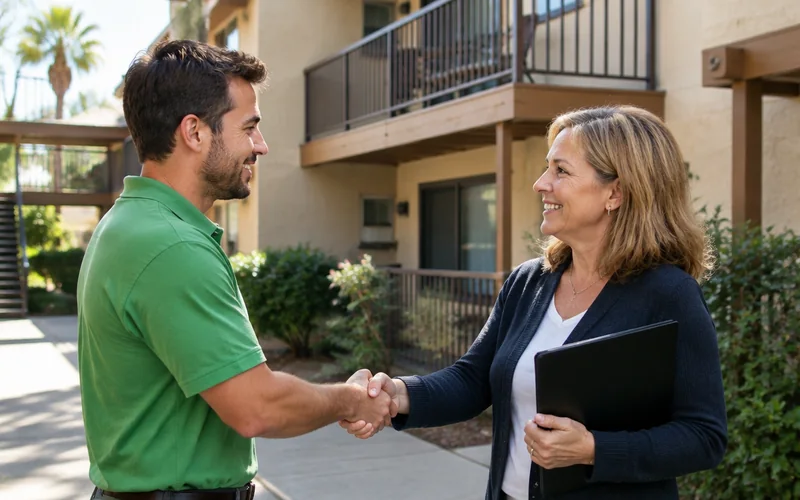
Bring Kaminskiy Care and Repair the inspection report and we price each finding, file the permit through the Glendale Permits portal and finish the work for the file. No report yet? Our sister company, Kaminskiy Design & Remodeling, performs the inspection.
 BBBAccredited Business
More than half of Glendale's homes sit in buildings of five or more units and three quarters of its housing went up before 1980, so California's balcony law (SB 721, Health and Safety Code 17973) reaches a great many Glendale buildings, and most of their reports come back with findings. Kaminskiy Care and Repair (CSLB #1106209) is the crew that fixes them: from any licensed inspector's report we price each finding in writing, file the permit through the Glendale Permits portal inside the 120-day window, rebuild the ledgers and joist ends, replace the split membranes, re-anchor the guardrails and close the file for the re-inspection. If the building has not been inspected yet, our sister company Kaminskiy Design & Remodeling, a B general building contractor since 2008 (CSLB #922807), performs the inspection under its own contract with you and stamps the report within 45 days. Condominium associations under SB 326 send us the engineer's report and we handle the repairs. One office on North Brand Boulevard, two licenses, one clock.
 Walk-ups, podium buildings, condos, stairs and walkways.
For a Glendale apartment owner the balcony law comes down to three duties: every wood-framed balcony, deck, exterior stair and walkway more than six feet off the ground gets inspected by someone the statute qualifies; the stamped report stays in your records and follows the building to a buyer; and whatever the report finds is permitted and repaired inside the statute's clock. The third duty is the one Kaminskiy Care and Repair carries. We price the findings line by line, file the permit with Building and Safety through the Glendale Permits portal, take the rotted ledgers and joist ends back to solid wood, lay new membranes sloped to the drain, re-anchor the rails and close the repairs out for the re-inspection. For the first duty, our sister company Kaminskiy Design & Remodeling holds the license class and the years the statute asks of an inspecting contractor.
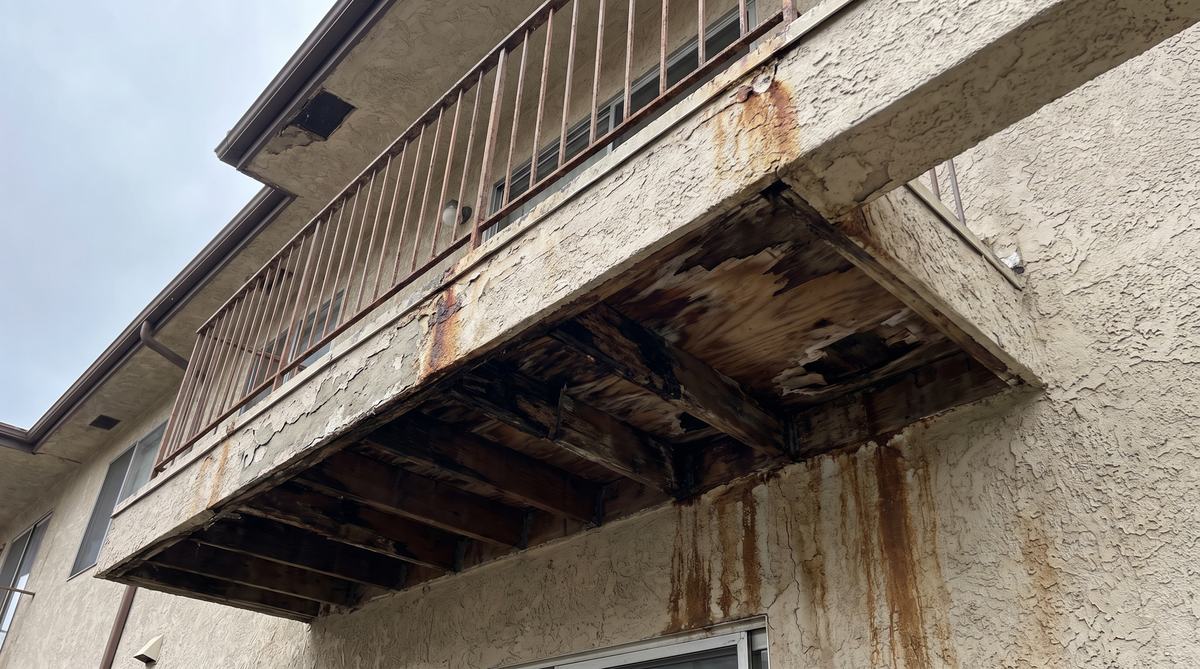
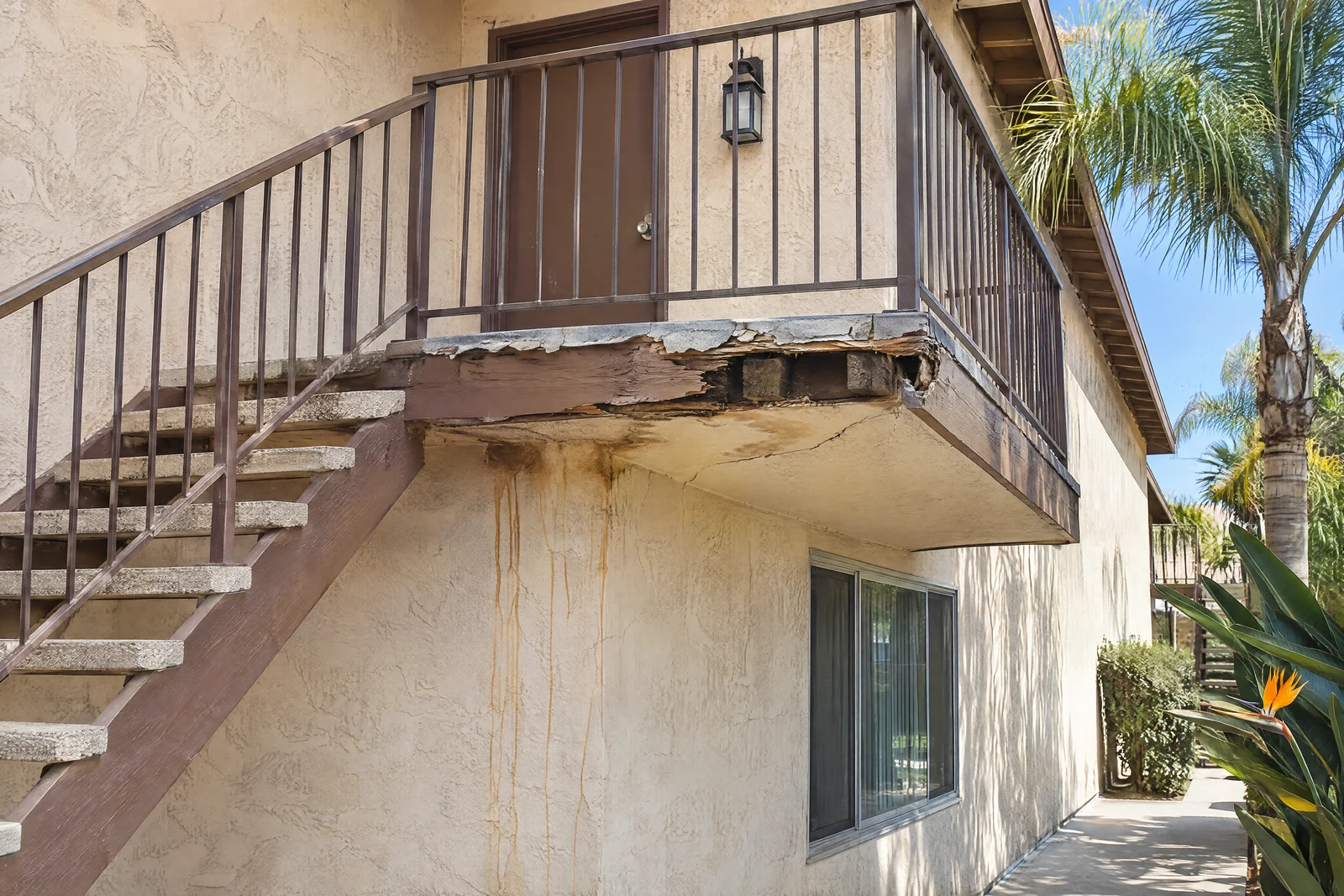
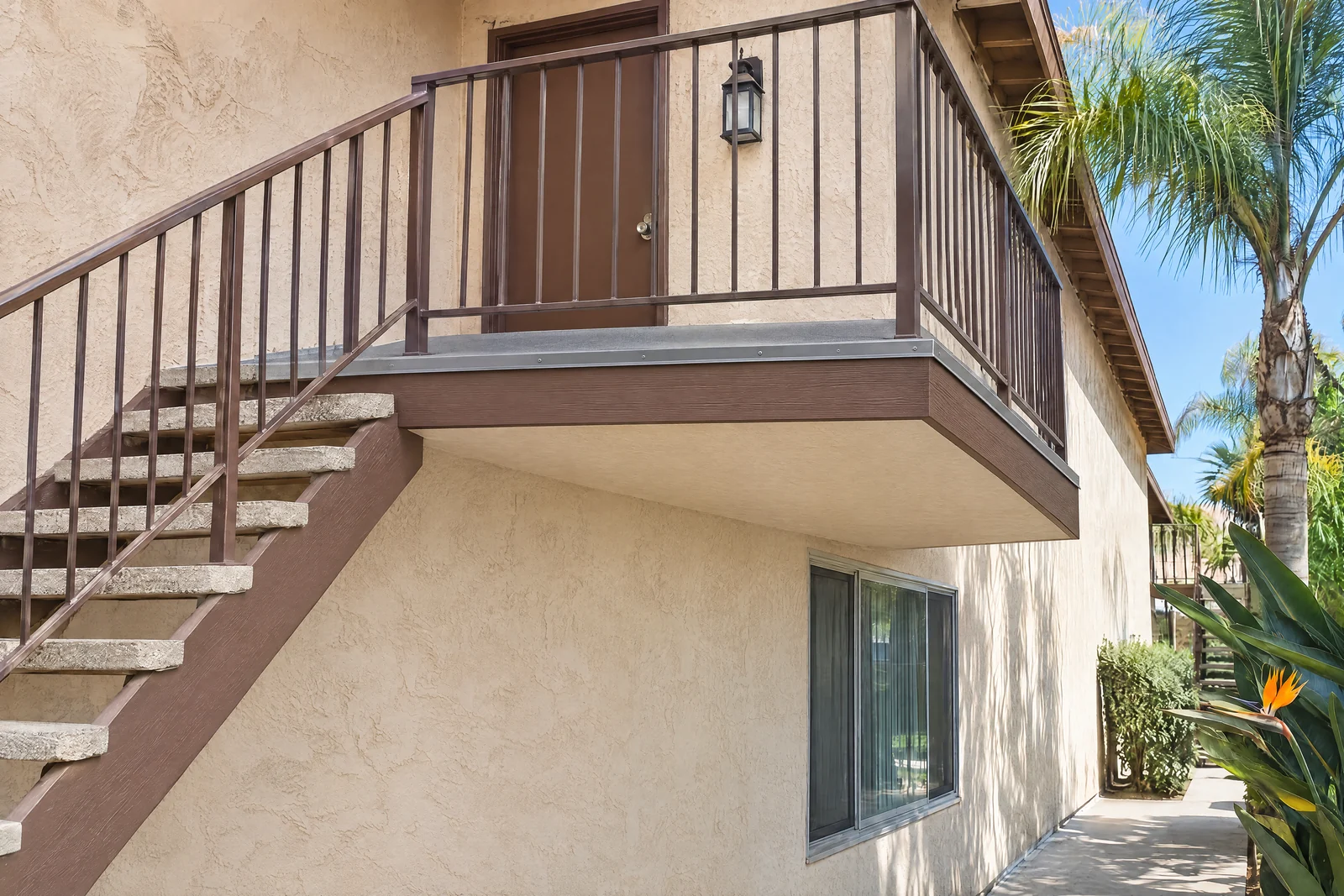
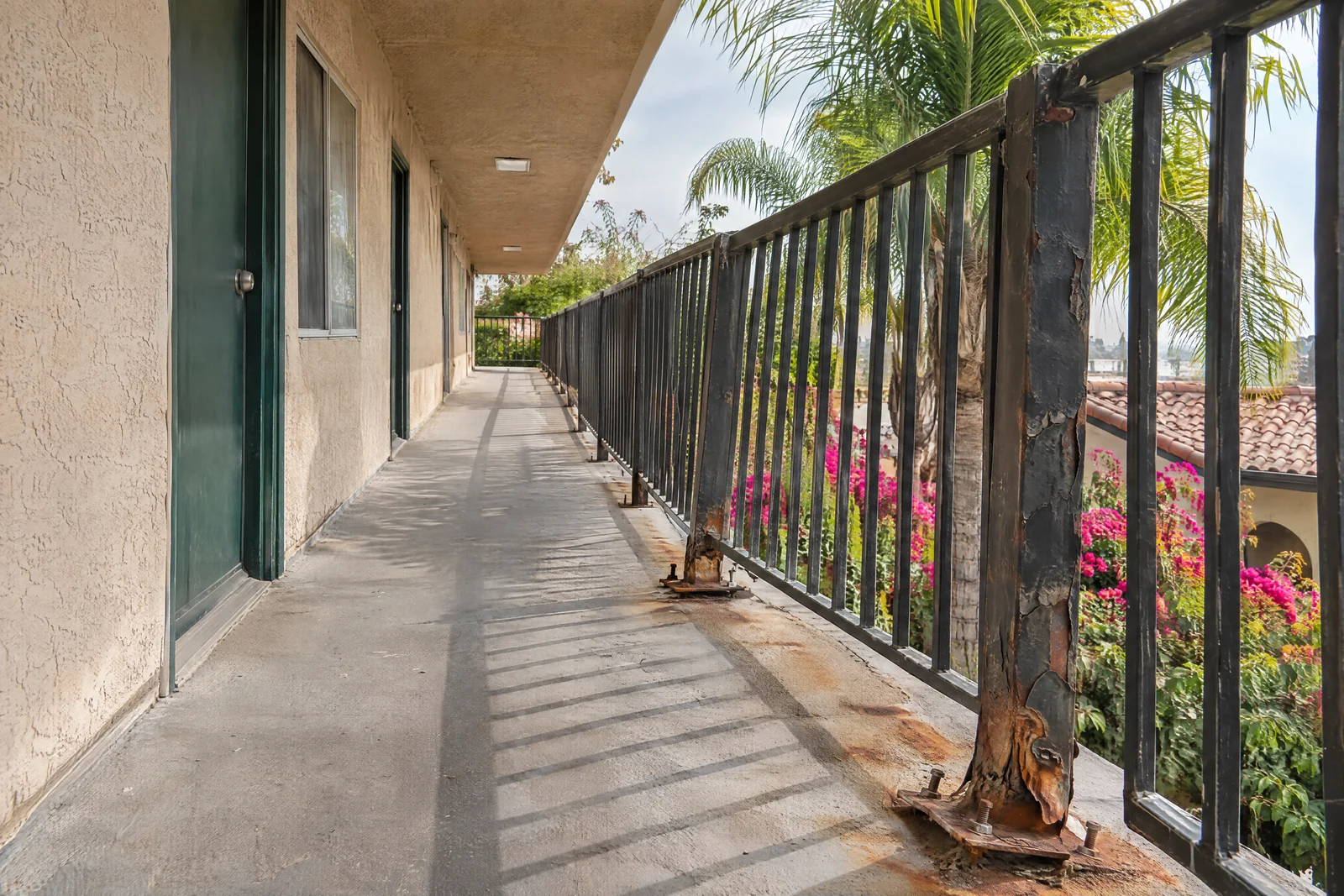
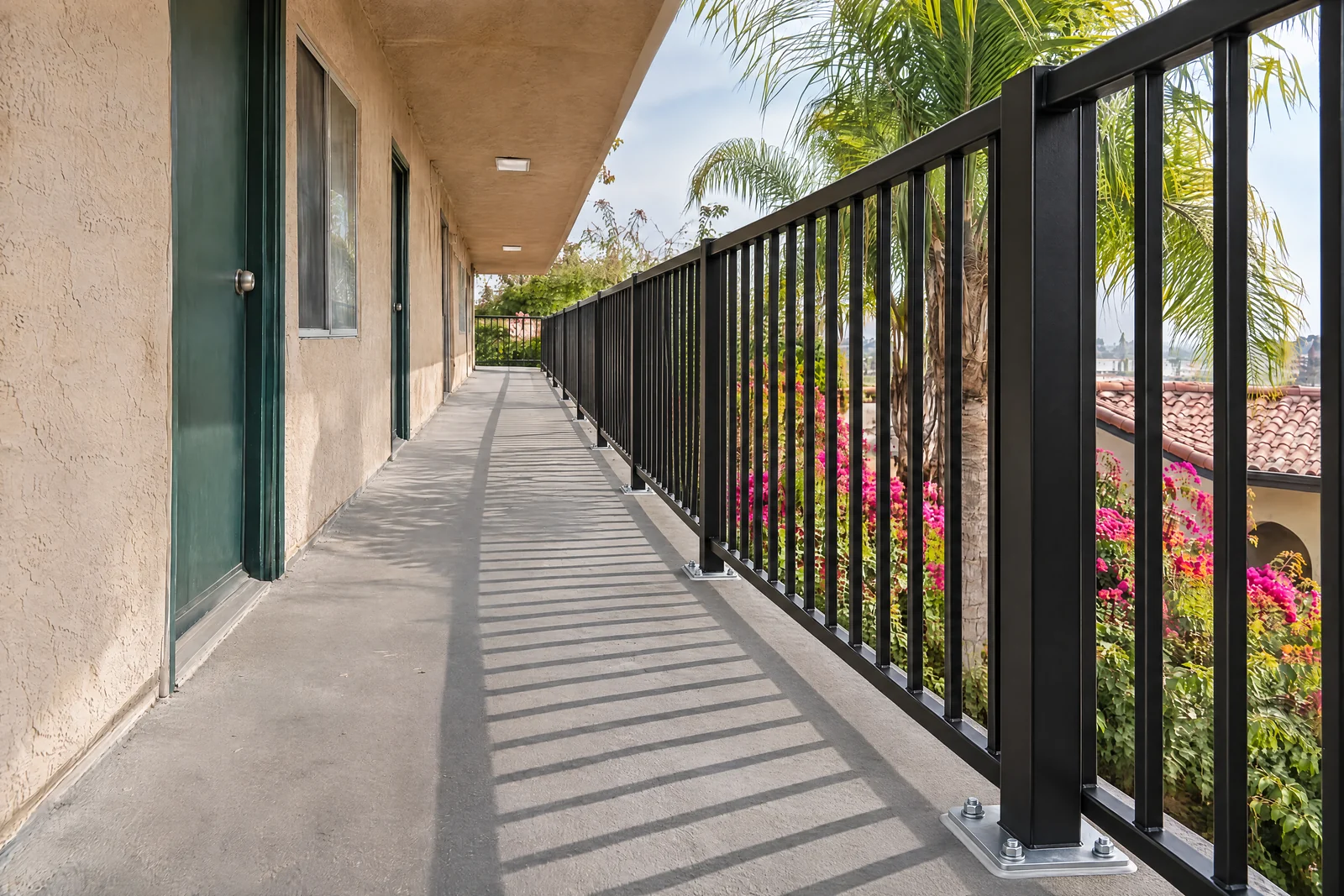
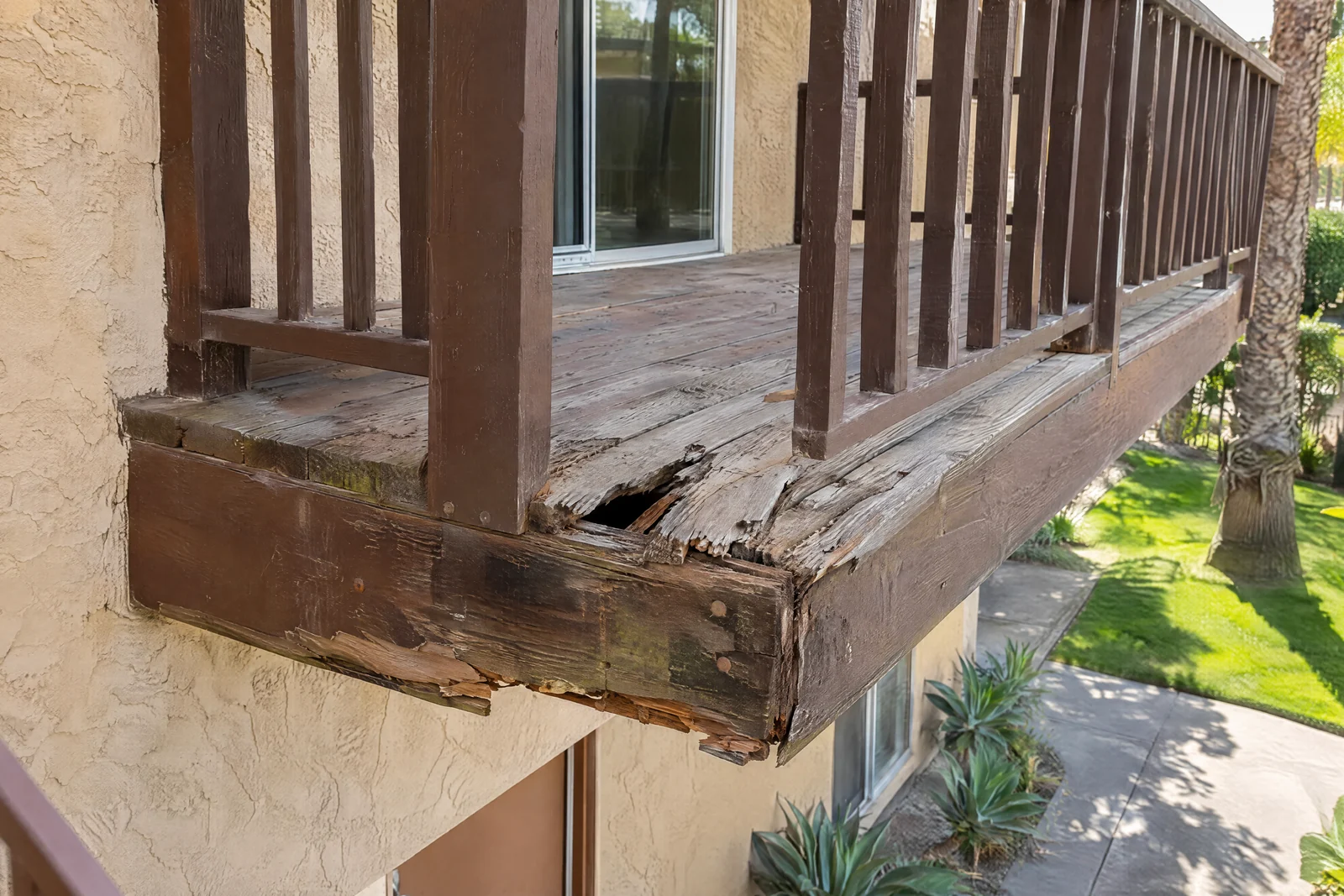
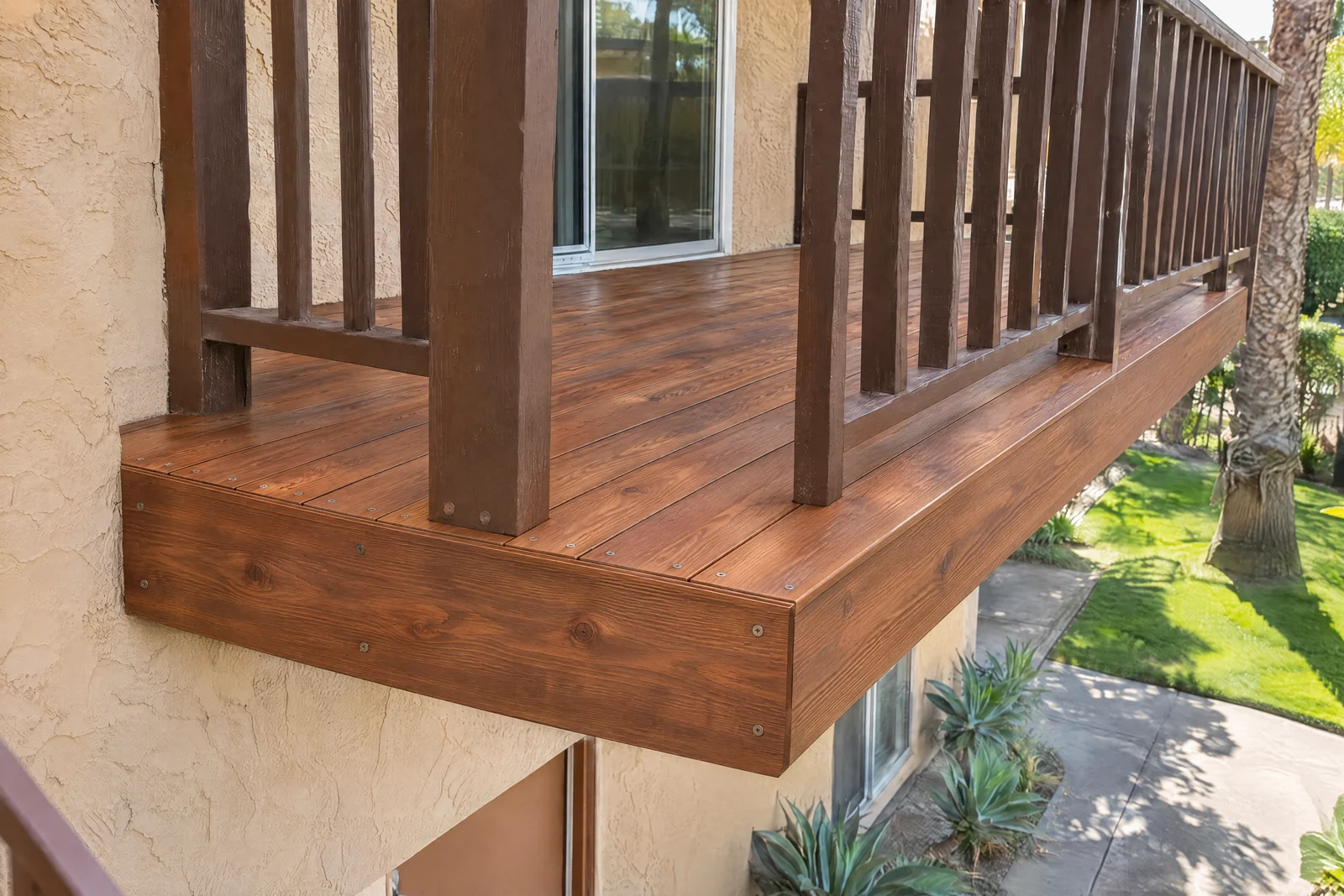
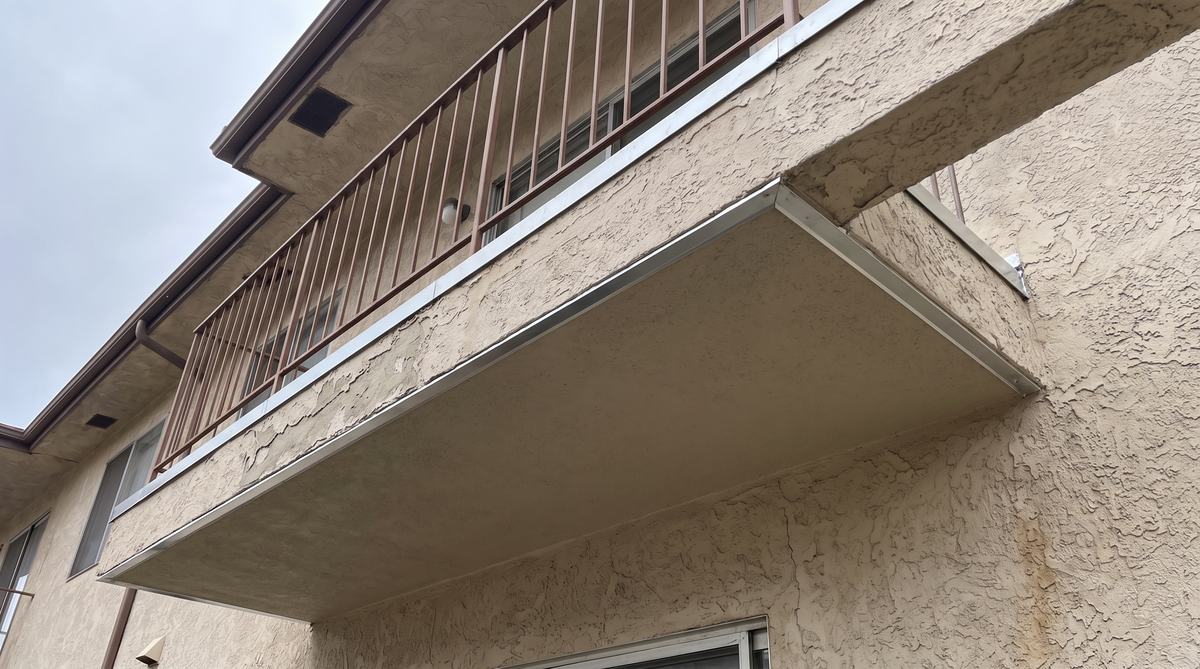 AFTERBEFORE
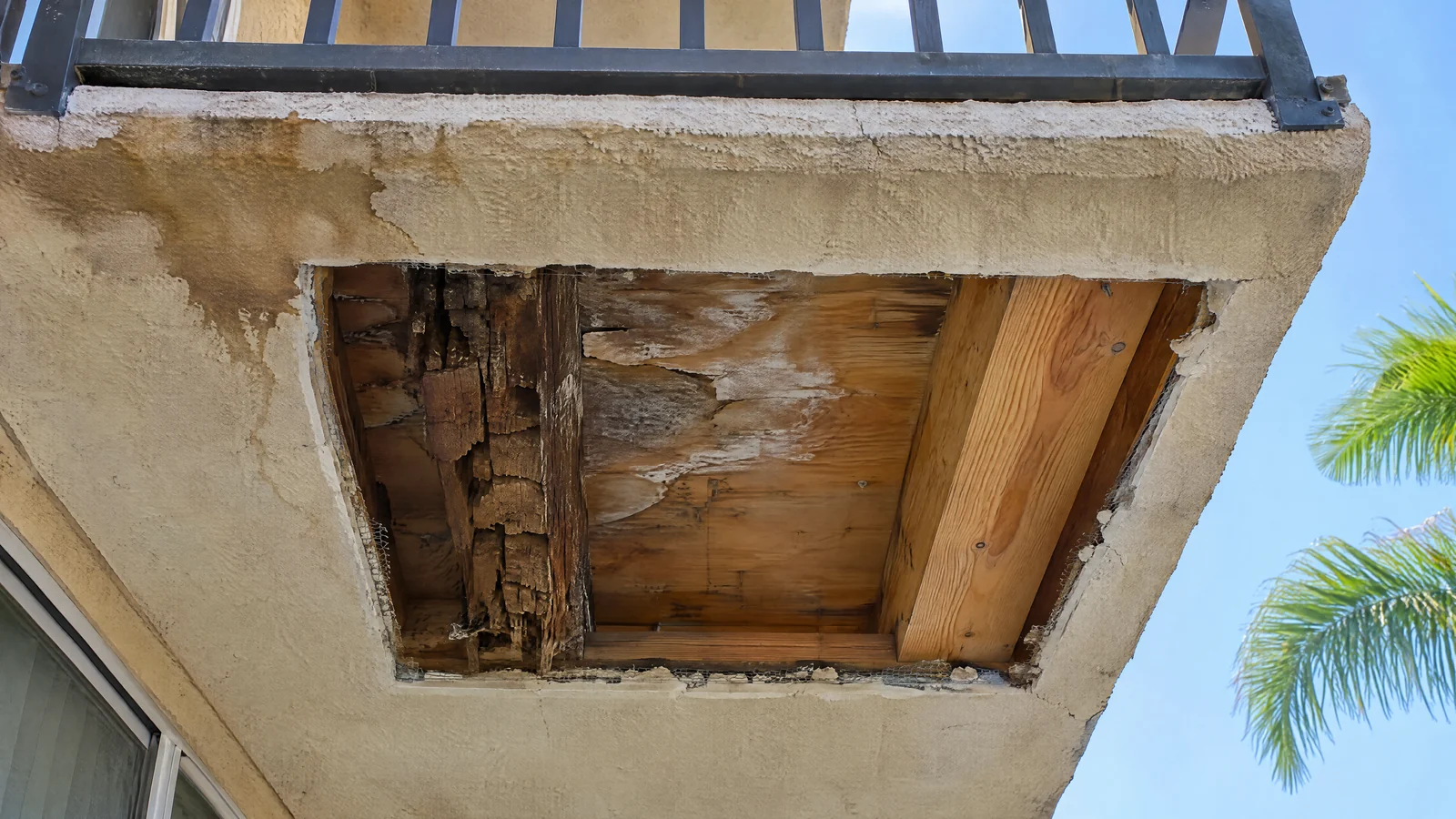 Dry Rot & Framing
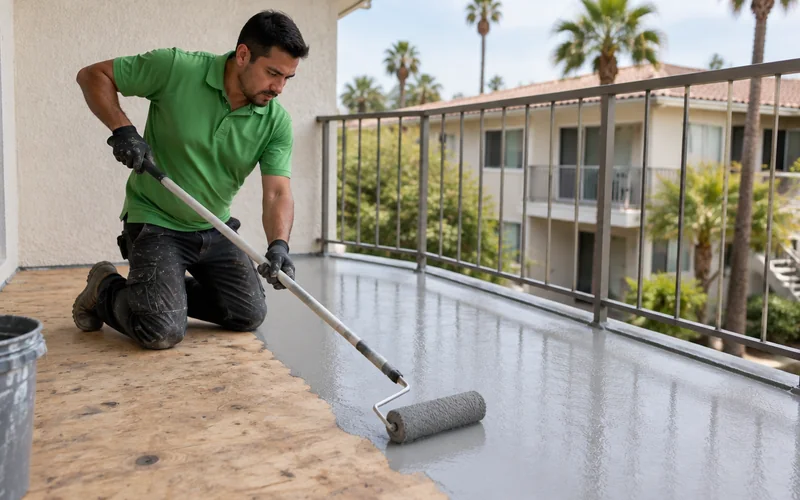 Waterproofing & Coating
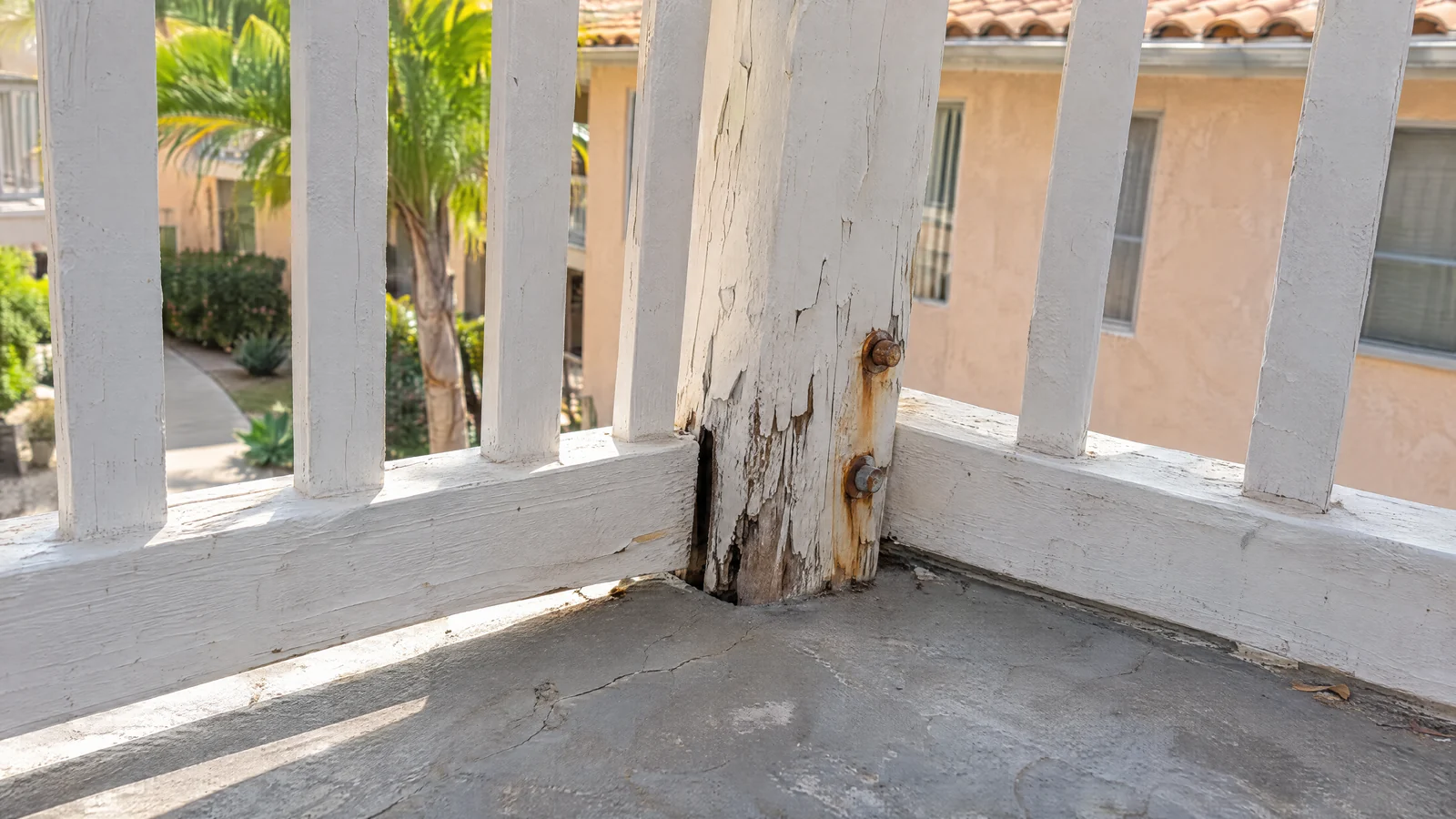 Railings & Guards
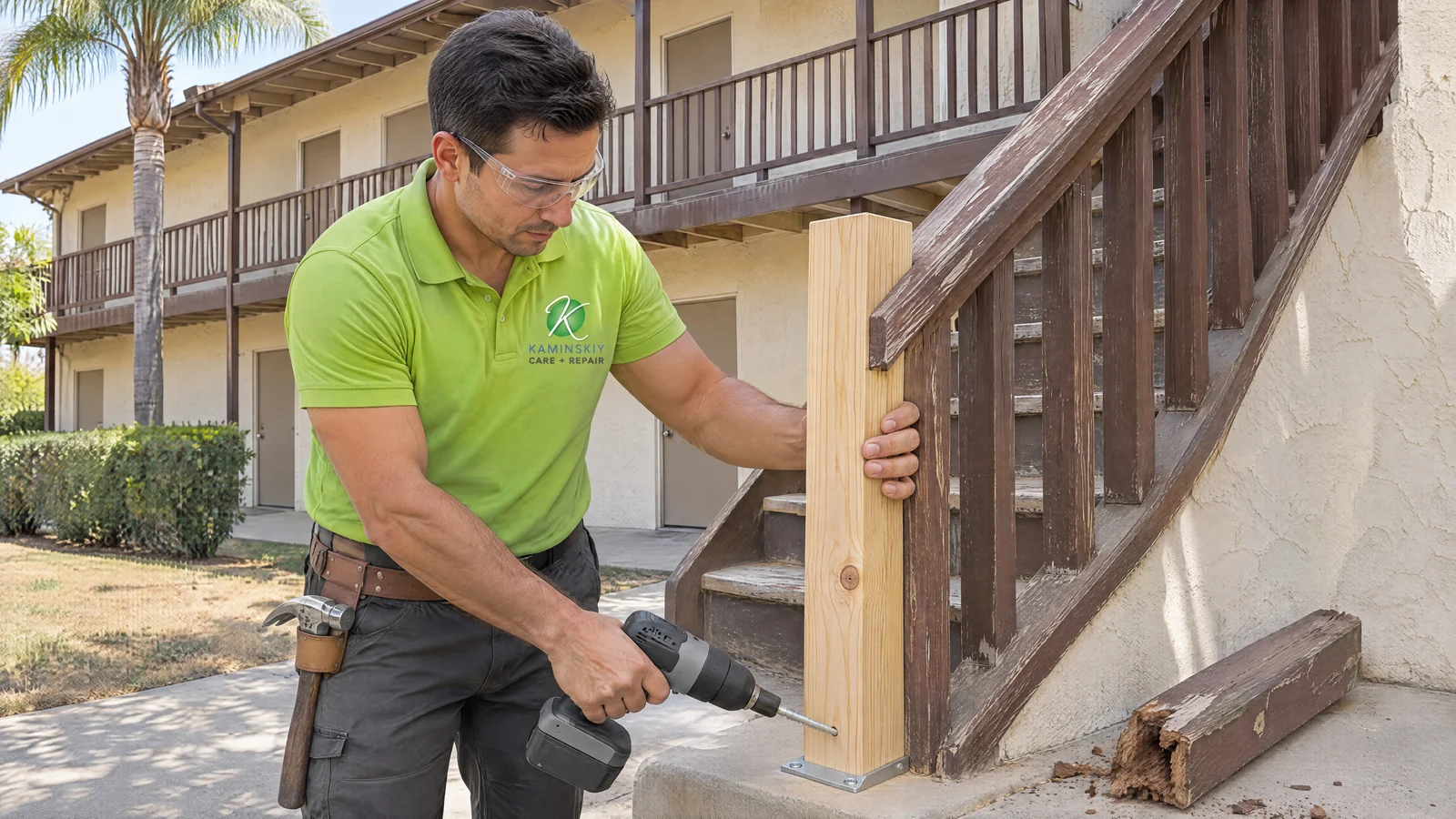 Stairs & Walkways
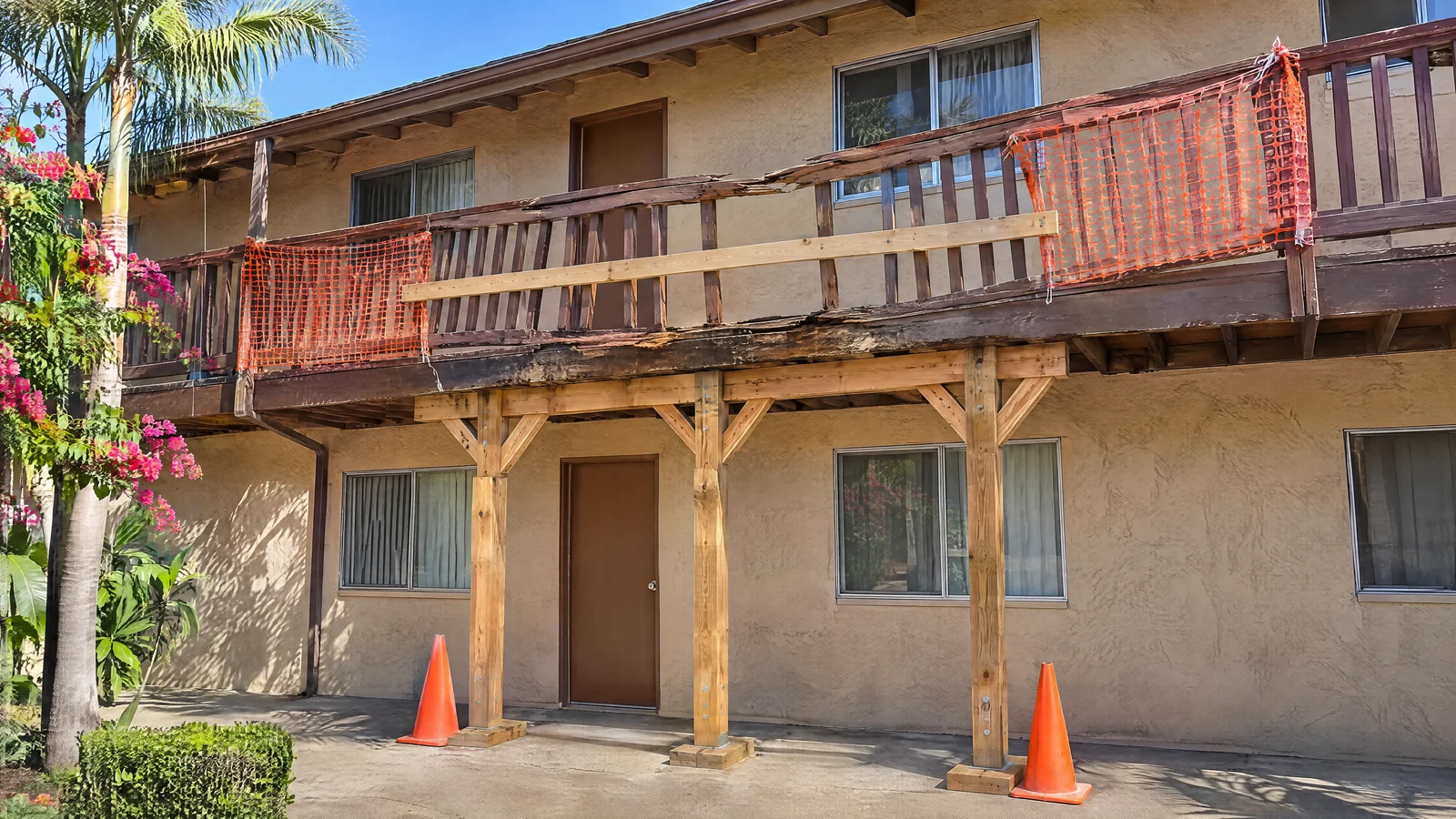 Emergency Shoring
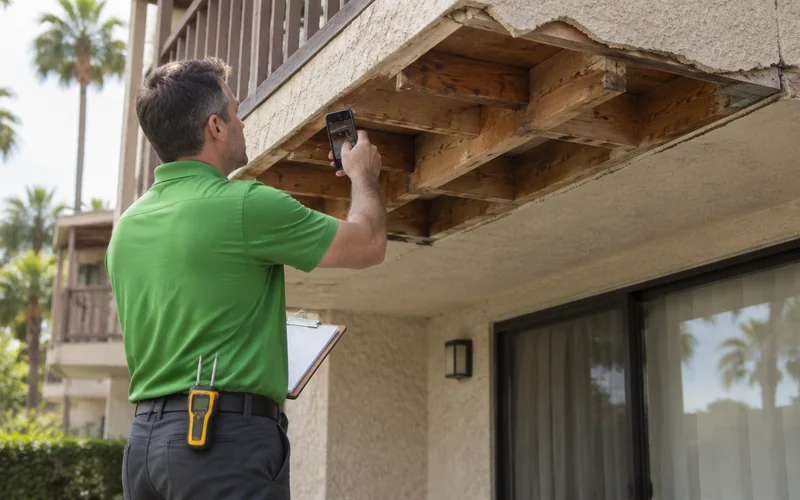 The Glendale Permits Portal
 Re-inspection & Close-outBuilding Not Inspected Yet?
Each of these is a call our North Brand office takes most weeks. Findings turn into a written scope with a permit filing before the window closes, anything tagged an immediate threat gets shored ahead of the rest, and a building with no report yet gets the inspection booked with our sister company.

Text or email the inspection report with the address. No report yet? Give us the address and the number of balconies, stairs and walkways, and we arrange the inspection with Kaminskiy Design & Remodeling.
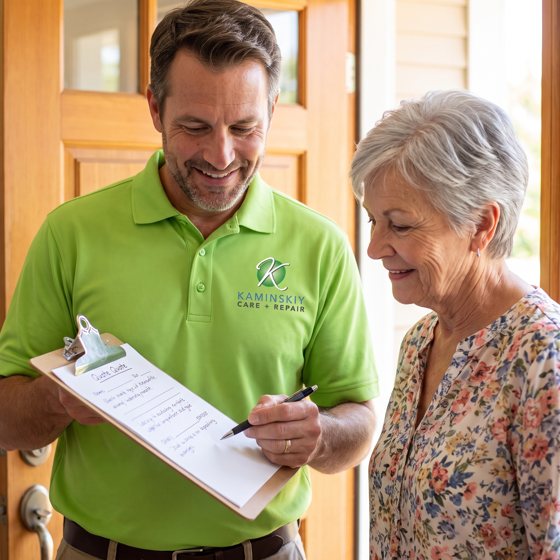
Each finding priced in writing after a site walk, the permit filed through the Glendale Permits portal inside 120 days, and anything tagged an immediate threat closed and shored first.
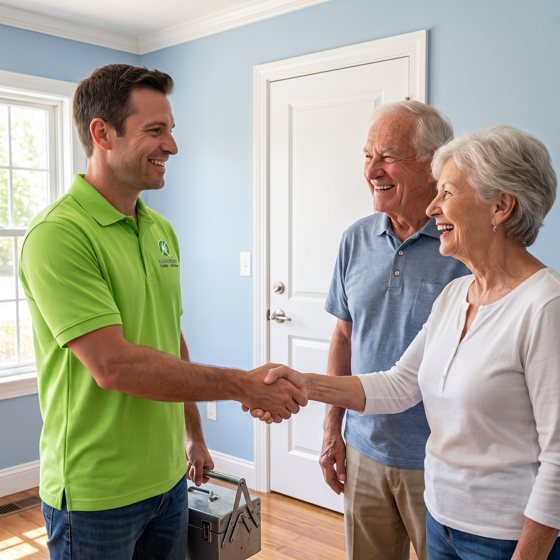
Ledgers, joists, membranes and rails rebuilt inside the permit window, every element photographed, the permit finaled and the close-out report in your records.
Every job is backed in writing by our workmanship warranty and done by a Kaminskiy-certified, background checked technician.
At the joint where the balcony enters the wall, because that is where Glendale balconies fail. The ledger and the joist ends sit behind stucco on the warm side of the building, the coating above them splits in the summer sun, and the winter rain gets in through the split and stays. So a Glendale report usually reads: elevated moisture at the ledger, deterioration at the joist ends, membrane failure at the wall joint, post base not sound. Each of those is a repair we price every week, and the report's service-life column tells you which balcony to rebuild first.
An apartment building with three or more units is under SB 721, Health and Safety Code 17973: inspected by January 1, 2026 and every six years after. A condominium project is under SB 326, Civil Code 5551: inspected by January 1, 2025, every nine years after, by a licensed structural or civil engineer or an architect. A Glendale owner with a walk-up on Maryland Avenue and a condo on Central follows both, with two inspectors and one repair contractor.
An immediate threat is closed off the day it is found, shored if it has to be, and reported to the City's Building and Safety Division within 15 days. Every other finding runs on 120 days to apply for the permit and 120 days from the permit to finish. At 180 days without repairs the inspector notifies the City, and 30 days after that notice the daily penalty starts to accrue.
Rot confined to a joist end or a post base is cut out and sistered or replaced. Rot that runs the length of the ledger or across most of the joists means the balcony comes off and goes back on new framing. Either way the waterproofing is replaced edge to edge, because a patched membrane on a south-facing Glendale balcony is next summer's leak.
Three quarters of Glendale's housing went up before 1980 and more than half of it is in buildings of five or more units, which puts more of this city under SB 721 than most of Los Angeles County. The 1960s to 1980s stucco walk-ups south of the 134, the podium buildings downtown and the hillside condos each fail in their own way, and each gets repaired in its own way.
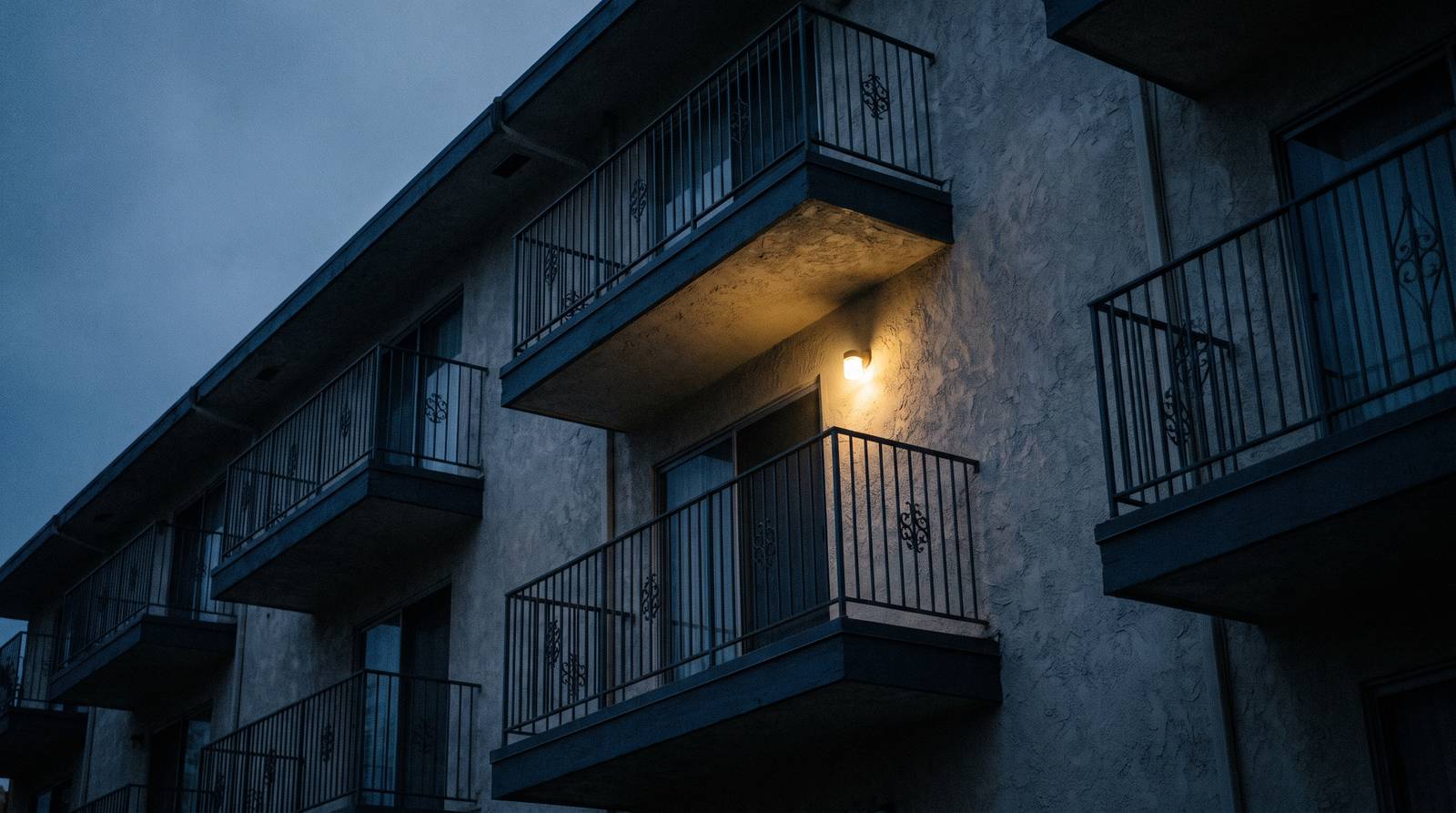
Two- and three-story stucco boxes from the 1960s to the 1980s, many with tuck-under parking and cantilevered balconies hanging off the street face. The south and west exposures take the full valley sun, so the deck coating splits first, the Santa Ana dust packs the crack, and the winter rain follows it into the ledger behind the stucco. The usual findings are rotted joist ends, a corroded ledger connection and rust at the guardrail post bases; the usual repair is new joist ends and ledger hardware, a new membrane with flashing and the rails re-anchored. The garden complexes along Pacific and Glenoaks add open stairs and corridor walkways to the count.
Wood-frame floors over a concrete podium, built from the 2000s on under the Downtown Specific Plan. The balconies are younger but not exempt: the membrane terminations at the door sill and the deck drain are where water gets into the framing, and a hung guardrail hides its anchors behind the fascia. A building that opened in 2019 or later runs on its own clock, an inspection within six years of the certificate of occupancy, which puts the newest buildings on Lexington and Central due now. The condominium towers on Brand and Central are under SB 326; the association's engineer inspects and we repair.
Most hillside homes are single-family and outside both laws, but the condominium complexes tucked into the canyons carry elevated walkways and stairs on posts, in shade that never fully dries. The findings there are post bases rotted at the footing, stair stringers soft at the bottom and moss on the walkway coating. The same crew covers the walk-ups of Burbank and Pasadena, the Altadena rentals under Los Angeles County's building department, and La Cañada Flintridge, each with its own permit counter and the same state clock.
Count the units. Three or more rental units in one building and SB 721 applies, with the first inspection due January 1, 2026 and the next every six years. A condominium project with three or more units follows SB 326 instead: due January 1, 2025, every nine years, inspected by a licensed structural or civil engineer or an architect. A duplex or a single home with an ADU is outside both, though the rot does not read the statute. Send us the address and the unit count and we tell you which clock you are on.
Each finding is opened up at the soffit or the carport ceiling, the rot taken back to solid wood, and the joist end, ledger or rim board sistered or replaced with treated lumber, fresh hangers and new ledger fasteners. The membrane above is replaced edge to edge with flashing at the wall and the door sill, sloped to the drain instead of the ledger; a patch on a south-facing Glendale deck is where the next leak starts. Rusted post bases and loose guardrails are re-anchored into the new framing or replaced at code height. Every element is photographed and numbered before, during and after, and the photos become the close-out report.
The statute, Health and Safety Code 17973, wants the repairs made by a qualified, licensed contractor the way the report, the state code and Glendale's Building and Safety Division say they should be done; for Glendale buildings that is Kaminskiy Care and Repair (CSLB #1106209), working from any licensed inspector's report. The inspection itself is allowed to four kinds of professional: a licensed architect; a licensed civil or structural engineer; a general contractor whose A, B or C-5 license is at least five years old and who has built multistory wood-frame buildings under it; or a certified building inspector or building official, none of them on the City's staff while inspecting. Our sister company Kaminskiy Design & Remodeling, a B general building contractor since 2008 (CSLB #922807), is the inspecting contractor, under its own contract with you.
The repairs are priced from the report, one written line per finding: a joist end with new flashing is a short line, a balcony rebuilt from the ledger out with a new guardrail is a long one, and nothing goes on the calendar until you have approved the lines you want. The scope you sign is the invoice you get, and the report is yours to hand to another contractor for a second number. The inspection, when the building still needs one, is a single figure from Kaminskiy Design & Remodeling, worked out from the element count, the number of types and whether the framing is reached from a carport or a lift.
Which law, how many findings, which ones carry a short service life: settled from the report, the street view and the carport, with the site walk booked before the call ends. No report yet? We arrange the inspection with our sister company and start here when it is stamped.
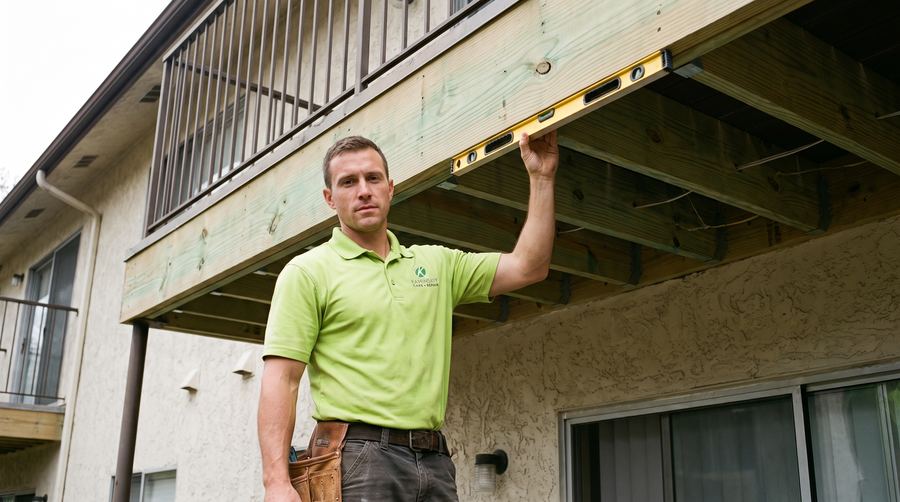
Tenants have written notice, each finding is checked from the deck and from underneath, hidden framing is metered or opened at a soffit, and the scope is written line by line against the report's own numbering.
Filed through the Glendale Permits portal as a multi-family repair, without plans where the exterior stays as it was, with plan check where a cantilever is rebuilt or a guardrail redesigned, and shoring first wherever an element is an immediate threat.
The work inside the permit window, every element photographed, the City's final, and a close-out report for your records, your lender and the next inspector six years on.
Subdivision (a) of Health and Safety Code 17973 sets the inspector's qualifications: an architect's or engineer's license, or an A, B or C-5 contractor's license held at least five years with multistory wood-frame experience, or certification as a building inspector. Subdivision (g) governs the repairs: a qualified, licensed contractor, working to what the inspector recommended, to the state Building Standards Code and to Glendale's own rules. The section never says the inspecting company cannot be the repairing one. The owner contracts with the inspector directly, which is what the statute wants; here that is Kaminskiy Design & Remodeling, with Kaminskiy Care and Repair on a separate repair contract, so the report stands on its own if you decide to bid the work.
Glendale's Community Development Department, Building and Safety Division, is the local enforcement agency, at the Permit Services Center on East Broadway. Repairs are filed online through the Glendale Permits portal as a multi-family alteration or repair; like-for-like framing, membrane and railing repair that leaves the exterior as it was goes in without plans, while a rebuilt cantilever, a new guardrail design or anything that changes the street face adds a design review exemption and plan check. Work filed from January 1, 2026 is under the 2026 Glendale Building and Safety Code, the 2025 state code with the City's amendments. The City publishes no separate SB 721 portal or form; the report stays in the owner's records, and an element tagged an immediate threat is reported to Building and Safety within 15 days.
January 1, 2026 was the first deadline (AB 2579 pushed it a year past the original 2025 date), and the cycle is six years. A report with findings opens two windows: 120 days to apply for the permit, then 120 days from the permit to finish the repairs. Let the repairs sit 180 days and the inspector has to notify the City; 30 days after that notice the owner owes a civil penalty of one hundred to five hundred dollars per day until the work is done, and the City can record a building safety lien to collect it. Keep each report through two cycles, and hand it to the buyer when the building sells.
Our office is downtown, on Brand. The Glendale crew starts the day at 201 North Brand Boulevard, a few blocks from most of the buildings this law reaches, and covers Burbank, Pasadena, Altadena and La Cañada Flintridge from the same door. Call 747-298-8227 or text a photo of the report, the balcony or the stain on the carport ceiling, and a person picks up. Since 2023 that has added up to 59 repair visits on 46 Glendale homes.
Can't find your answer? Call 747-298-8227 and ask us anything.
Call 747-298-8227Send the report with the address. We walk the building against the findings, price each one in writing, and file the permit through the Glendale Permits portal inside the 120 days the statute allows; the repairs then run inside 120 days of the permit, an immediate threat is closed and shored first, and the close-out report with a photo of every element goes in your records for the re-inspection.
No. The statute asks that the repairs be made by a qualified, licensed contractor to the inspector's recommendations; it does not tie you to the inspector. Kaminskiy Care and Repair works from any licensed inspector's report, and our scope follows the report's own numbering so the two documents read side by side.
One written line per finding, from the report: a joist end with new flashing is a short line, a balcony rebuilt from the ledger out with a new guardrail is a long one, and you approve the lines before a date is set. Call 747-298-8227 with the report and the address and the written scope follows the site walk.
Our sister company does: Kaminskiy Design & Remodeling, a B general building contractor since 2008 (CSLB #922807), counts the element types, samples at least 15 percent of each and stamps the report with photos within 45 days, under its own contract with you, as the statute requires. Kaminskiy Care and Repair (CSLB #1106209) then prices and completes the repairs. Book it through the North Brand office at 747-298-8227.
Yes. In our case it is two licensed companies under one roof: Kaminskiy Design & Remodeling signs the inspection report and Kaminskiy Care and Repair takes the repair contract. Nothing in the statute forbids that; what it asks is that a qualified, licensed contractor does the work the way the report, the state code and Glendale's Building and Safety Division say it should be done. Every finding in our report carries a photo and a description, so the report is just as useful if you hand it to another contractor for a bid.
Schedule it now and keep the booking confirmation with the building's records. The statute's daily penalty attaches to repairs that sit undone after a report, not to a late inspection date, and Glendale's Building and Safety Division would far rather see an owner moving than one waiting for a letter. Should the inspector find an immediate threat, that balcony or walkway is closed the same afternoon, shored if it needs it, and the City is notified inside 15 days; the rest of the findings start the 120-day permit window.
On a condominium project the association owns the SB 326 duty: it hires the licensed structural or civil engineer or the architect, and in most sets of governing documents it also carries the structural framing and the waterproofing, while an exclusive-use balcony is divided the way the CC&Rs divide it. The engineer writes the report; Kaminskiy Care and Repair does the carpentry, membrane and railing work it calls for on the Glendale towers and the canyon complexes, in phases that keep the walkways open, with the paperwork the board needs for its reserve study.
SB 721 is the 2018 state law, now Health and Safety Code 17973, that makes the owner of an apartment building with three or more units have its wood-supported balconies, decks, porches, exterior stairs, landings and walkways checked by a qualified inspector when they sit more than six feet above grade. The inspector samples at least 15 percent of each element type, tests the hidden framing, and writes a stamped report with photos inside 45 days that states each element's condition and what has to be repaired. The first round was due by January 1, 2026; the next falls six years later, and the report follows the building to its next owner.
Give us the building's address and the report if one exists; if not, say so and we arrange the inspection. You get a scope and a date back. The phone is quicker: 747-298-8227.
Every repair on the report, permitted through the Glendale portal and closed out, from one office on North Brand Boulevard. No report yet? Our sister company performs the inspection.
We answer in under three rings, 24/7.No price games. You get a clear written quote before any work begins, backed by our workmanship warranty.