Hand Kaminskiy Care and Repair the SB 721 report and the findings become a line-by-line price, a Temecula permit and a rebuilt balcony that passes the City's final. No report on the building yet? Our sister company, Kaminskiy Design & Remodeling, performs the inspection.
 BBBAccredited Business
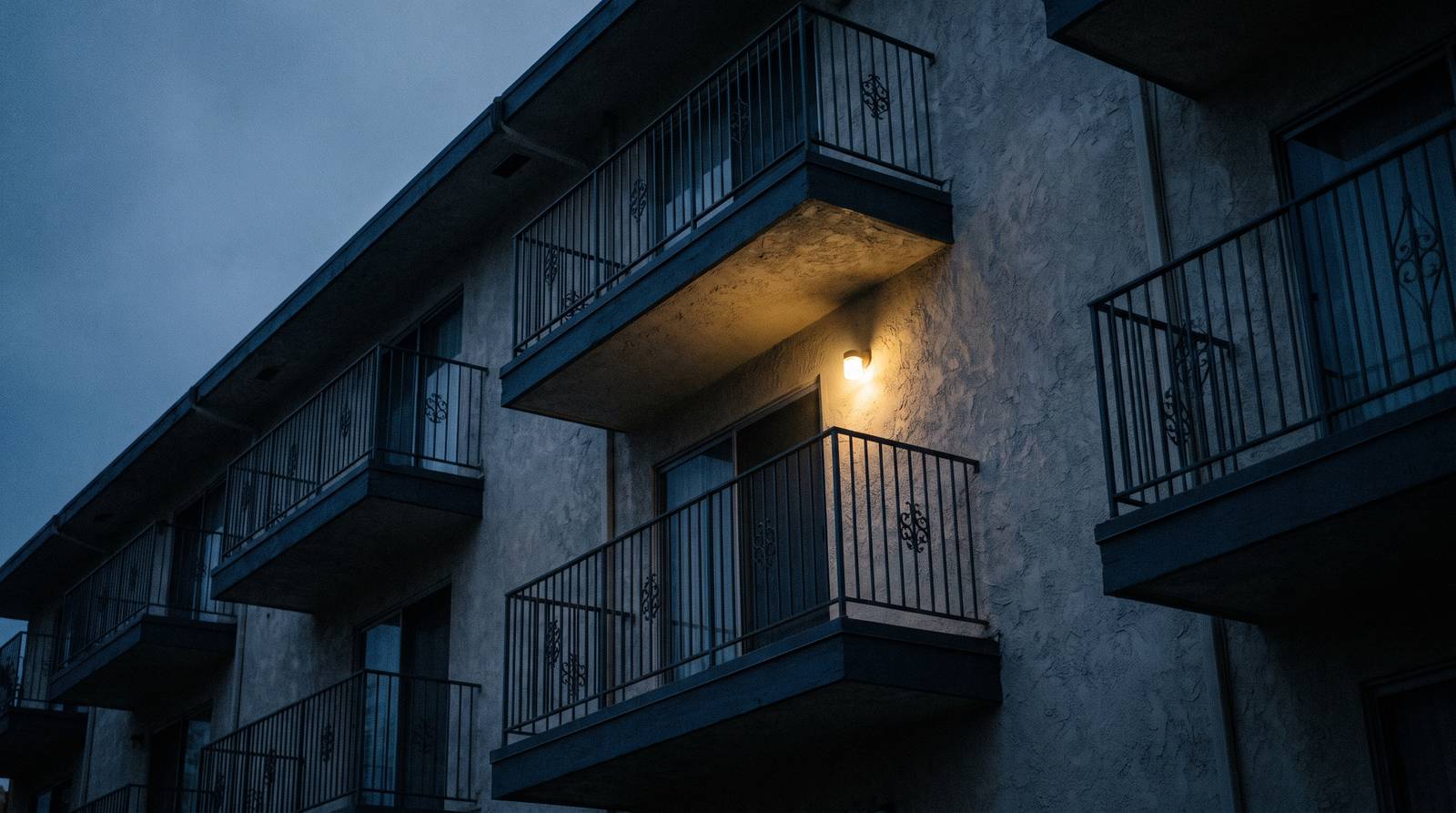
Kaminskiy Care and Repair (CSLB #1106209) rebuilds the exterior elevated elements that California's balcony law, SB 721 (Health and Safety Code 17973), has Temecula apartment owners inspecting and then repairing: the wood-framed balconies, second-floor walkways and open stairs of the garden communities along Rancho California Road, Margarita Road and Moraga Road, the newer walk-ups and podium buildings of Uptown Temecula, Harveston and Temecula Parkway, and the apartments below Old Town on Pujol Street. Whoever signed the report, we take it from there: a written price per finding, the City of Temecula permit filed through Citizen Self Service inside the statute's 120 days, the joists and ledgers reframed, a membrane rated for inland sun laid edge to edge, the rails reset, and the close-out letter after the City's final. A building that has not been inspected yet calls the same number: our sister company Kaminskiy Design & Remodeling, holding a B general building license since 2008 (CSLB #922807), carries out the inspection on its own contract and signs the report inside 45 days. A condominium association under SB 326 hands us the engineer's report and we do the work. The crew starts every day at our Temecula office on Remington Avenue, west of the 15.
 Garden apartments, podium buildings, condominium associations.
A Temecula apartment owner owes the law three things: a qualified inspection of every balcony, deck, walkway and exterior stair that stands more than six feet above the ground and rests on wood, a signed report kept with the building's records through two inspection cycles, and the repairs that report calls for, finished inside the deadlines it starts. Kaminskiy Care and Repair carries the third one. We turn the findings into a written price per line, file the permit at the City's Permit Center on Main Street, reframe what the inspector opened, recoat the decks and walkways with a membrane built for hundred-degree afternoons, reset the guardrails and bring the City inspector back for the final. The inspection, for a building that still needs one, comes from our sister company Kaminskiy Design & Remodeling, which holds the license class and the years the statute names for a contractor-inspector.
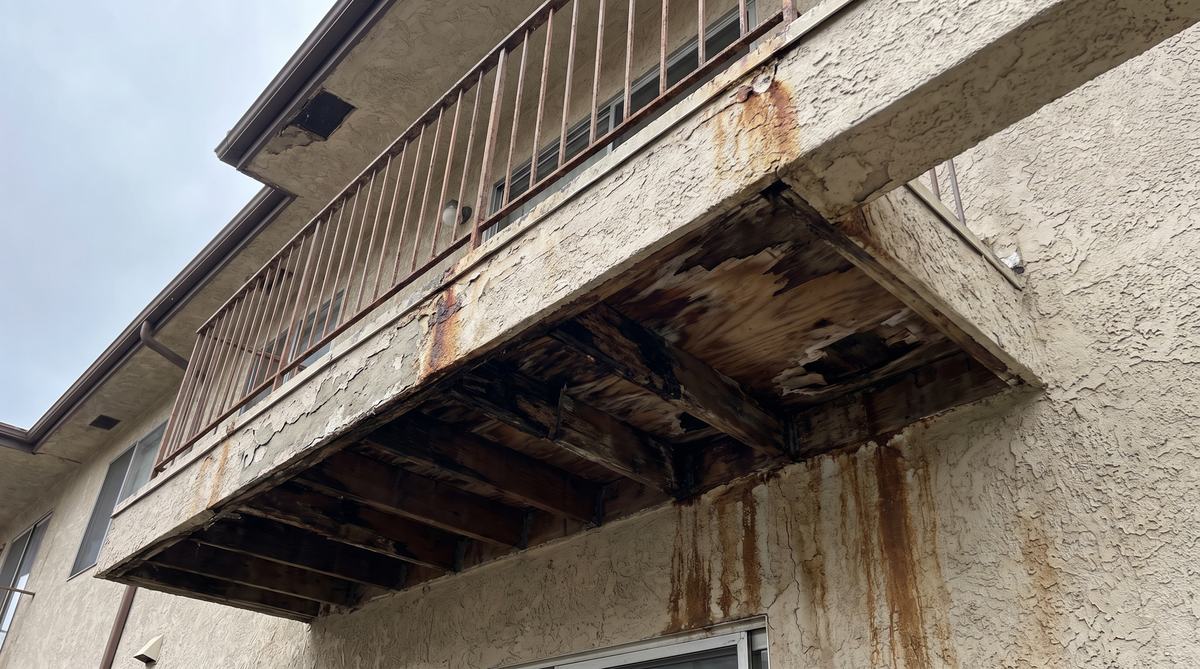
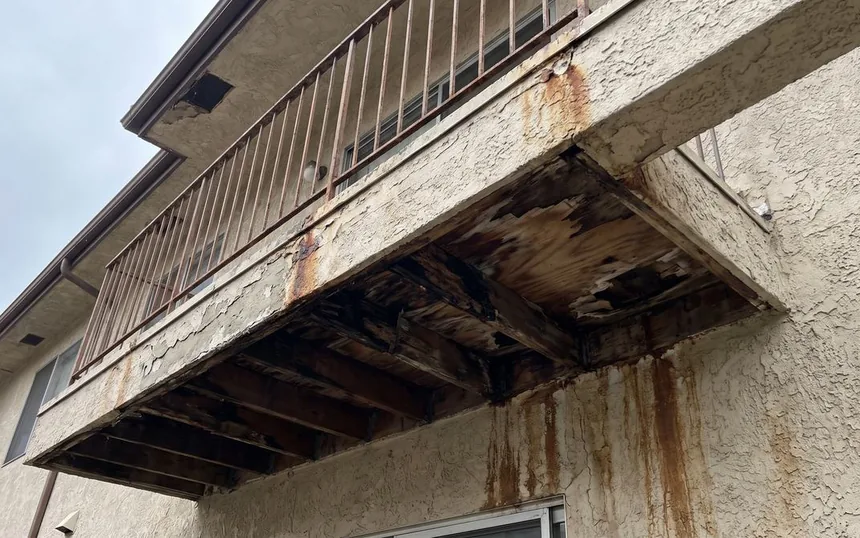
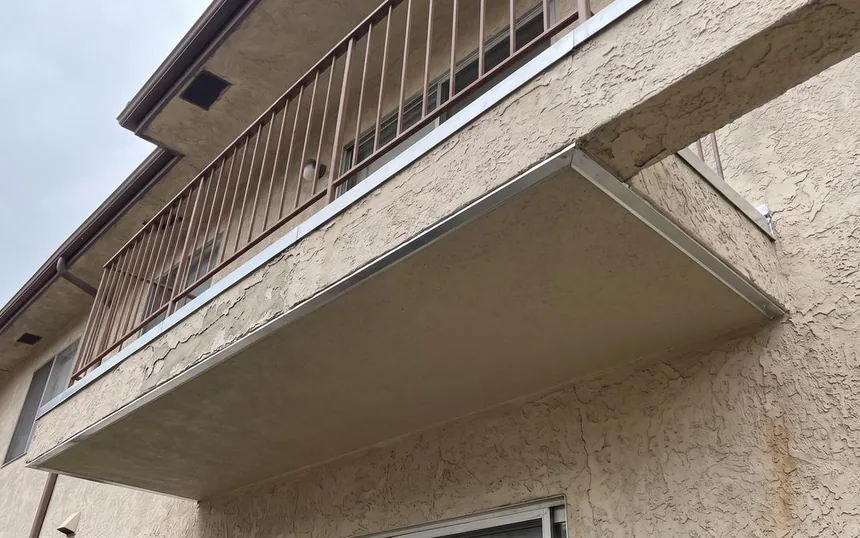
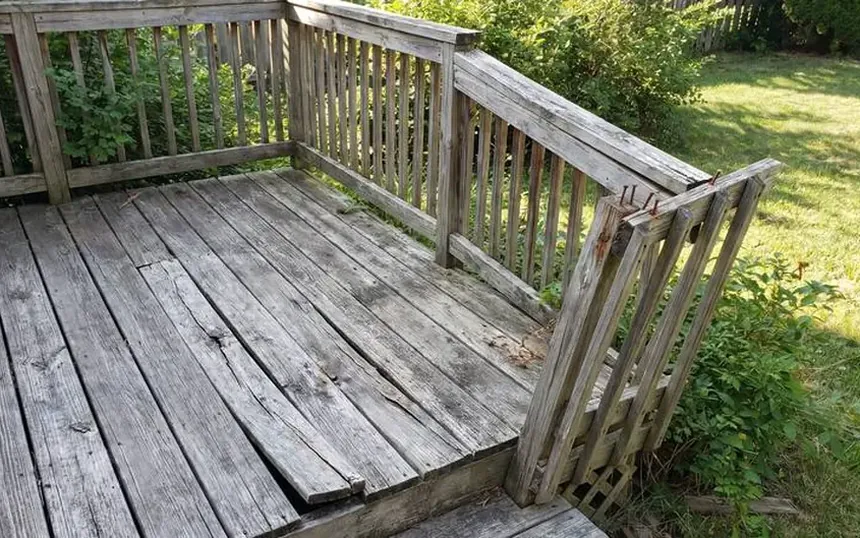
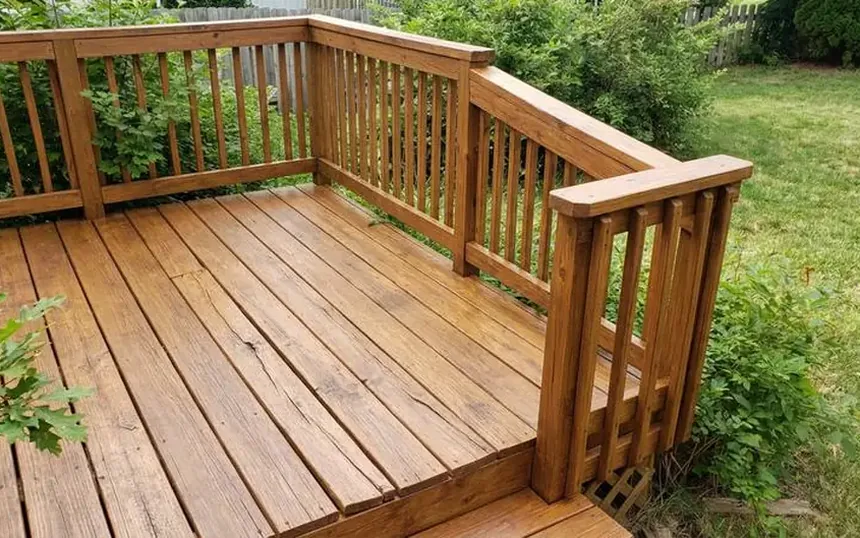
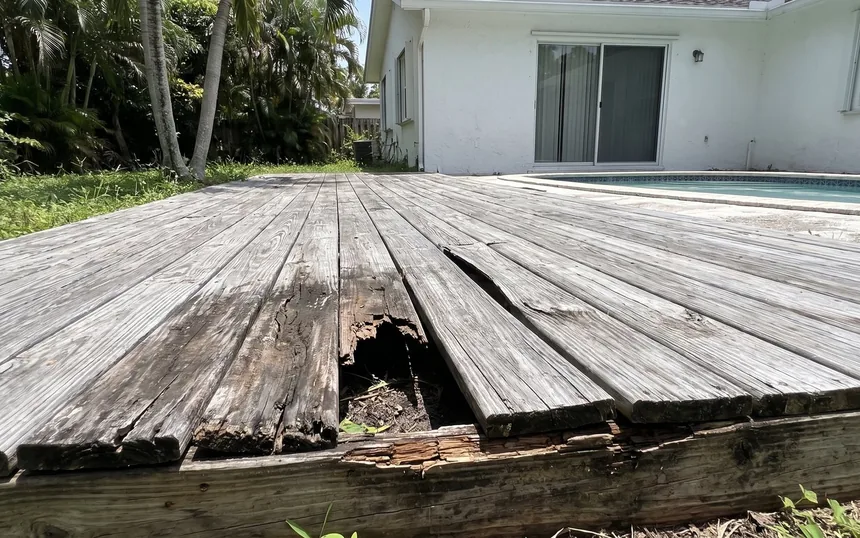
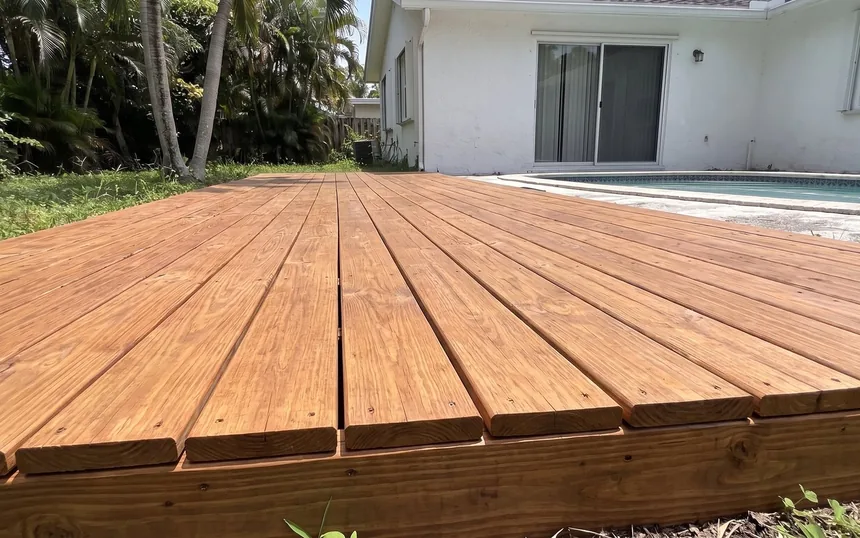
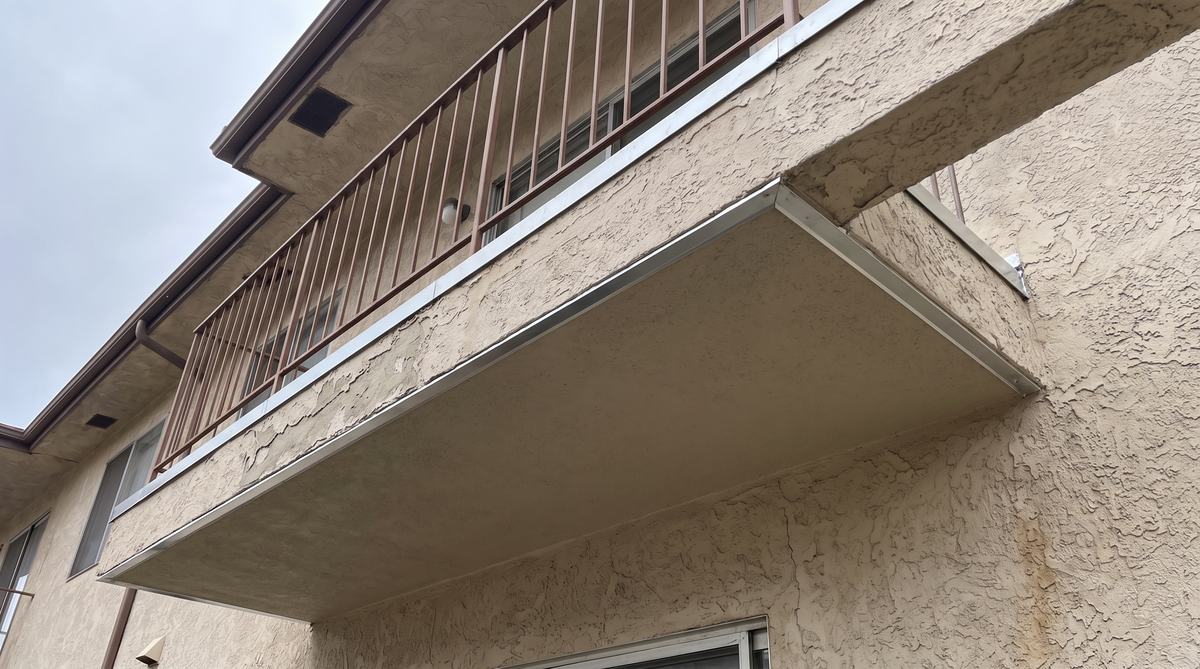 AFTERBEFOREJoists, Ledgers & Stringers
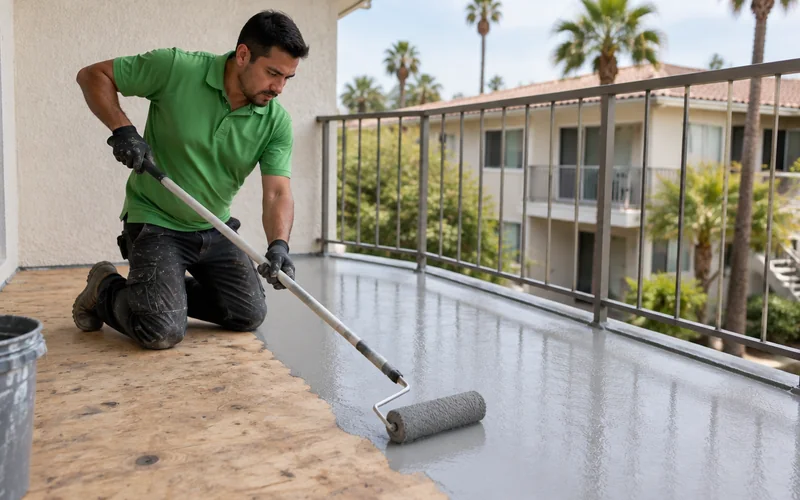 Deck Coatings for Valley Sun
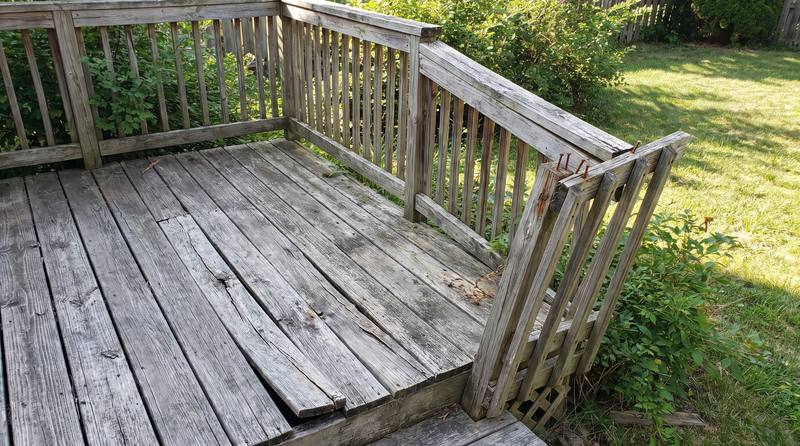 Guardrails & Handrails
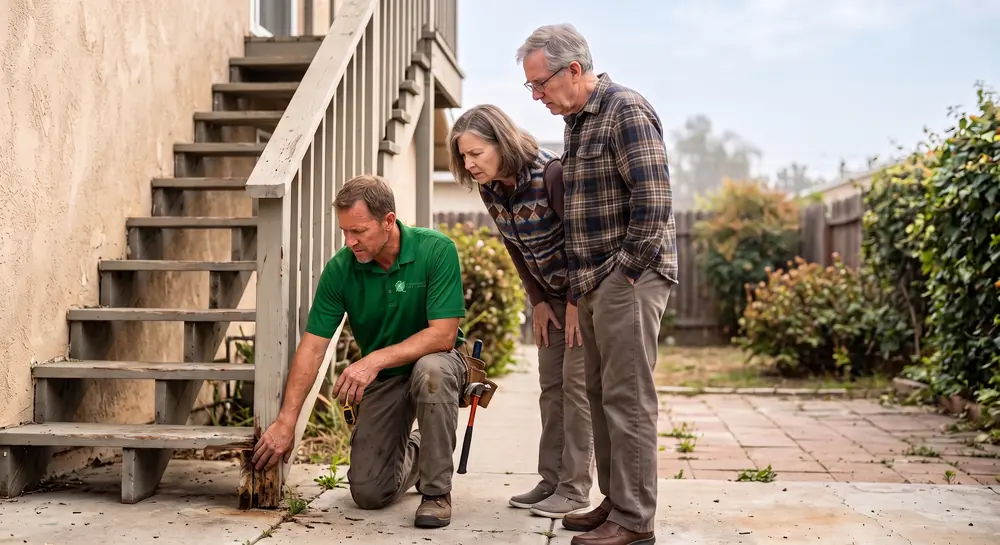 Walkways & Exterior Stairs
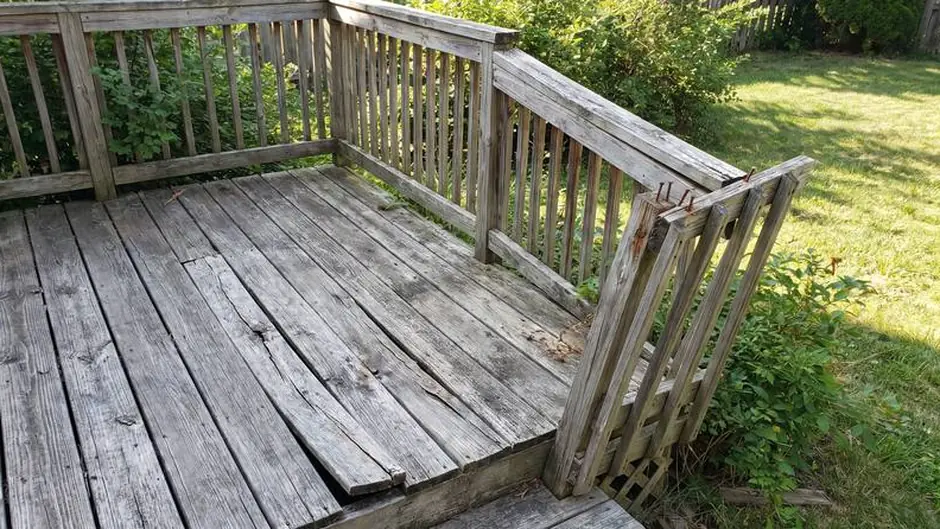 Immediate-Threat Shoring
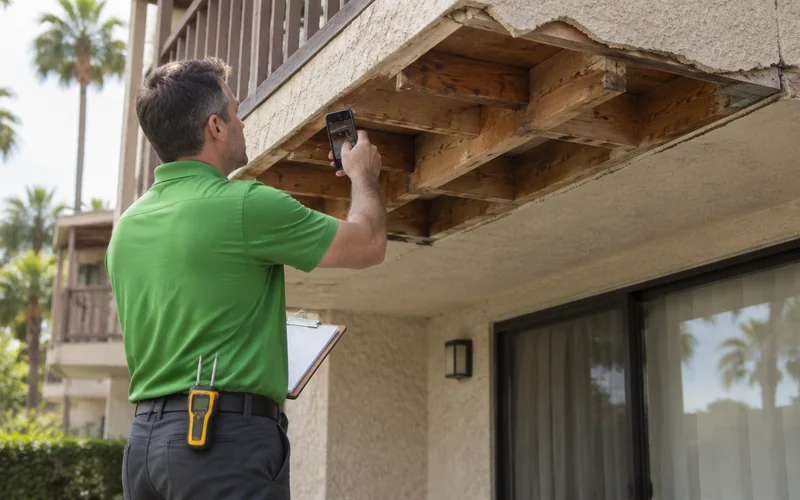 The Temecula Permit
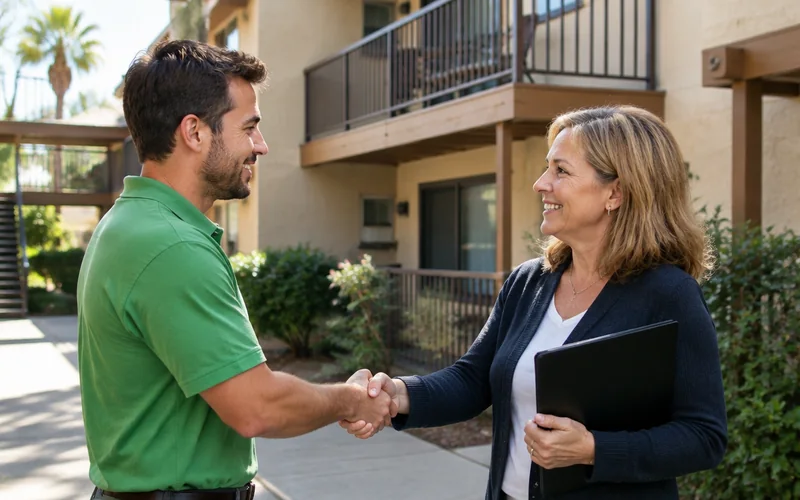 Final Inspection & RecordsInspection Still Needed?
Our Remington Avenue office hears every one of these. Expect a written price per finding and a permit submittal well before the clock runs down, shoring ahead of everything else when an element is an immediate threat, and the inspection booked with our sister company when a building has no report yet.

Text or email it with the address. If the building has never been inspected, give us the street and the unit count instead and the inspection is booked with Kaminskiy Design & Remodeling.
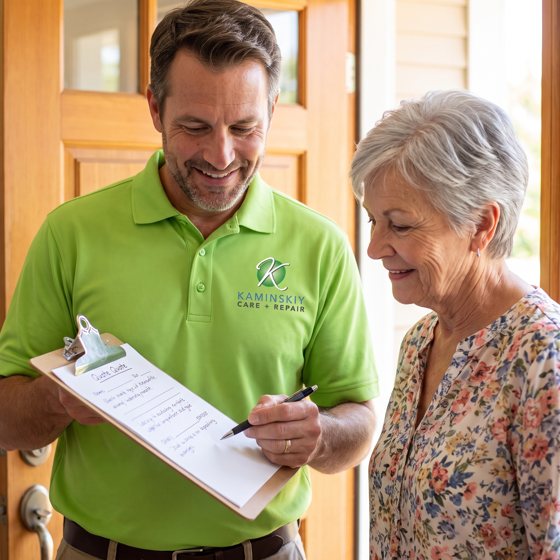
A walk of the building against the findings, a price on every line, the Temecula permit filed inside 120 days, and shoring before anything else for whatever the inspector tagged an immediate threat.
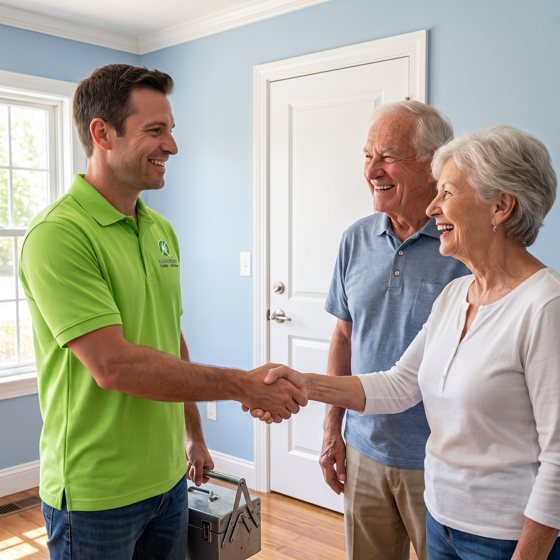
Joists, ledgers, stringers, membranes and rails rebuilt inside the permit window, each element photographed, the City inspector's final, and the close-out letter for your records.
Every job is backed in writing by our workmanship warranty and done by a Kaminskiy-certified, background checked technician.
The deck coating is the first thing valley sun ruins and the last thing the inspector grades. A Temecula report therefore reads from the top down: a coating chalked and split, a membrane open at the slider, and under it the lines that cost money, elevated moisture at the ledger, joist ends deteriorated behind the stucco, a stringer soft at the landing, a post base without sound wood. Each line is a repair priced on its own, and the remaining-life estimate beside each element tells you which balcony comes apart first.
Rentals, three units or more in one building, garden community or podium: SB 721, due January 1, 2026, then every six years. Condominiums, three units or more: SB 326 (Civil Code 5551), due January 1, 2025, then every nine years, inspected by a licensed structural or civil engineer or an architect. In Temecula the condominium flats and townhomes cluster in Redhawk, Vail Ranch, Wolf Creek and Harveston, and the rental buildings line the arterials; an owner with both follows both.
Clock one starts when the report reaches the owner: 120 days to apply to the City of Temecula for the repair permit. Clock two starts when the permit is issued: 120 days to finish. An immediate threat ignores both, is closed off at once and is reported to Building and Safety within 15 days. Repairs still open 180 days after the report bring a notice from the inspector to the City, and 30 days after that the daily penalty begins.
One soft joist end or a rotted post base gets cut back to sound wood and sistered or swapped. Rot running the length of the ledger, or through most of the joists, means the balcony comes apart and is reframed. In both cases the coating goes back edge to edge, with a membrane rated for inland sun, because a patched coating on a Temecula balcony splits again at the seam by the second summer, and the final inspection expects a whole system.
Temecula is young for a California city. Nine in ten of its homes went up after 1980, a third of them in the 1990s and a third in the 2000s, and its apartment stock follows the arterials: two- and three-story stucco garden communities along Rancho California Road, Margarita Road and Moraga Road, the walk-ups and podium buildings of Uptown Temecula on Jefferson Avenue, Harveston and Temecula Parkway, and the apartments on Pujol Street below Old Town. The sun does the damage here, and the winter rain collects on it. Which corridor your building sits on decides what the report finds and what the rebuild looks like.
The 1980s and 1990s stock: stucco buildings around a pool and a carport court, with open stairs, second-floor corridor walkways and cantilevered balconies under an elastomeric coating. Thirty summers of hundred-degree afternoons chalk that coating and split it at the seams and the slider threshold; the Rainbow Gap breeze brings damp air every evening; the sprinklers soak the stair bases and walkway edges every morning; then the December storms push water through the cracks into the ledger and the joist ends behind the stucco. The usual finding is rot at the joist ends and a wet ledger, with stringers soft at the landing. The usual repair is new joist ends and ledger, flashing, a membrane rated for inland sun, and guardrails re-set into sound wood. These buildings have the most elements to count and the most to sample, so the inspection is planned around resident access.
The newer stock: wood-frame walk-ups and podium buildings from the 2000s on along the Jefferson Avenue corridor the City now calls Uptown Temecula, around Harveston, along Temecula Parkway, and on Pujol Street under the Old Town bluff, with Old Town's own mixed-use buildings carrying balconies over the street. Young framing fails at its details rather than its bones: a slider threshold with the flashing cut short, a sealant joint the Santa Ana winds pulled open, a scupper ponding water against the stucco, a liquid-applied membrane cooked through on the sunny corner. Buildings permitted from January 1, 2019 onward follow a separate rule, inspection within six years of the certificate of occupancy, which catches the newest Uptown and Harveston buildings. Condominium flats here answer to SB 326; the rental buildings to SB 721.
The hillside tracts east of the 15 hold the condominium associations: stacked flats and townhomes from the late 1990s on, under SB 326, where the engineer or architect inspects and we repair from the report, phased so residents keep their stairs. Murrieta, Menifee and French Valley have the same decades of garden and podium stock and their own city permit counters, and the Remington Avenue crew covers them. East of the city line the wine-country estates sit on county land: a guest house with a balcony or a tasting room with a deck is almost always outside both laws, because the statute starts at three units, but the same sun and the same drip lines rot the same posts, and we inspect and rebuild those on request, without a clock.
Start with the unit count, then the ownership. Three or more rental units in a building means SB 721 (Health and Safety Code 17973): first inspection due January 1, 2026, then every six years. Three or more condominium units means SB 326 (Civil Code 5551): first inspection due January 1, 2025, then every nine years, by a licensed structural or civil engineer or an architect. A duplex, a house with a guest unit and a wine-country tasting room fall under neither, although rot never checks the statute first. A building mapped as condominiums but rented as apartments is decided by how the units are held today; send us the address and we settle it on the call.
A soffit panel comes off, the rot is cut back to sound wood, and the joist end, ledger, rim board or stringer is sistered or replaced with treated lumber, new hangers and new flashing. The coating is stripped to the sheathing across the whole walking surface, re-sloped where it ponded, flashed at the slider and the wall, and recoated with a membrane rated for inland sun; a patch on a Temecula deck is next summer's crack. Posts that rock and anchors rusted inside the stucco are reset into the new framing or replaced at code height. Each element is photographed before, during and after, and those photographs are the close-out letter.
Health and Safety Code 17973 asks only that whoever repairs be licensed, qualified and guided by the inspector's recommendations and the Building Standards Code; for a Temecula building that is Kaminskiy Care and Repair (CSLB #1106209), and the report can carry any qualified signature. Four categories may sign it: licensed architects; licensed civil or structural engineers; general contractors with an A, B or C-5 classification and five or more years as license holders constructing multistory wood-frame buildings; and individuals certified as building inspectors or building officials. A City employee cannot be the inspector. Our sister company Kaminskiy Design & Remodeling, a B general building contractor since 2008 (CSLB #922807), signs the SB 721 reports we are asked to arrange, on its own contract.
Per finding, each with its own line in the proposal: a sistered joist end, a recoated walkway, a reframed cantilever with a new guardrail. Nothing is scheduled until you have read every line, and the report is yours to shop if you prefer another contractor for the work. The inspection, when a building still needs one, is per building, not per balcony, quoted by Kaminskiy Design & Remodeling from the element count, the number of element types and the access to the framing; a twelve-unit garden building on Moraga Road and a two-hundred-unit podium building on Jefferson Avenue sit at opposite ends of that range.
On the first call we read the findings and the remaining-life estimates, settle SB 721 or SB 326, and put the walk of the building on the calendar. A building with no report yet gets the inspection booked with our sister company instead, and the repair side starts when it is signed.
Residents hear from you ahead of time. Each finding is checked from its deck and from underneath, closed framing is metered or a soffit panel is opened, and the proposal is written against the report's own numbering, a price on every line.
Filed through Citizen Self Service with the report and the repair detail attached, stamped plans where a cantilever is reframed or a guardrail changed, the City's ten-to-twelve-day plan review, and shoring first wherever an element is an immediate threat.
The carpentry and the coatings inside the permit window, photographs of each element, the City inspector's final, and a close-out letter for your records, your lender and the next inspection cycle.
Subdivision (a) of Health and Safety Code 17973 sets the inspector's qualifications: an architect, a civil or structural engineer, an A, B or C-5 contractor with five years as a license holder in multistory wood-frame work, or a certified building inspector. Subdivision (g) sets the repairer's: a qualified and licensed contractor working to the inspector's recommendations, the manufacturer's specifications, the Building Standards Code and the City's requirements. The section is silent on whether the two can be related, so our group does it as two companies: the owner contracts with Kaminskiy Design & Remodeling for the inspection and the report, as the statute requires, and separately with Kaminskiy Care and Repair for the carpentry. Drop the second contract and the report is still complete.
The local enforcement agency is the City of Temecula's Community Development Department, Building and Safety Division, at the Permit Center on the first floor of 41000 Main Street. The City's own deck page exempts only a freestanding deck not more than 30 inches above grade, and an SB 721 element is by definition more than six feet up, so a balcony, walkway or stair repair takes a building permit, filed through the City's online Citizen Self Service portal with the inspector's report and the repair detail attached. The City's balcony and deck standard, handout CD-22, is written for single-family homes and duplexes only, so an apartment building files its own detail, and a reframed cantilever, a changed guardrail or any engineered alternative goes in with wet-signed and stamped plans. The City's published plan review runs ten to twelve working days on a new submittal. Permits filed since January 1, 2026 build to the 2025 California codes under Temecula Municipal Code 15.04. The City publishes no separate SB 721 page or portal; the report stays in the owner's records, and an immediate threat is reported to Building and Safety within 15 days.
January 1, 2026 was the first deadline, after AB 2579 pushed it back a year from January 1, 2025; the cycle repeats every six years, and a building whose permit was issued on or after January 1, 2019 is due within six years of its certificate of occupancy instead. Once a report lands, the owner has 120 days to apply for the repair permit and 120 days from its issue to finish the work. Repairs still open 180 days after the report trigger a notice from the inspector to the City, and a 30-day warning later a civil penalty of one hundred to five hundred dollars per day accrues until the work is done, backed by a building safety lien. Two cycles of reports stay with the building and go to the buyer at sale.
Based on Remington Avenue, in Temecula. The valley crew starts its day on Remington Avenue, west of the 15, minutes from Uptown, the Rancho California Road communities and the Pujol Street apartments, and a short drive to Murrieta and Menifee, so a report with findings gets walked quickly. Call 951-419-4481, text a photo of the balcony or the report, or send the form, any day from eight to eight.
Can't find your answer? Call 951-419-4481 and ask us anything.
Call 951-419-4481Send it over with the address. We walk the building against the findings, write a price on every line, and file the Temecula permit through Citizen Self Service inside the statute's 120 days, with the report and the repair detail attached. The City's plan review takes ten to twelve working days, the repairs run inside 120 days of the permit, anything tagged an immediate threat is shored before all of it, and the close-out letter with photographs follows the City's final.
Not to the statute and not to us. Health and Safety Code 17973 asks that the repairs be made by a licensed, qualified contractor following the inspector's recommendations; any architect, engineer, qualified contractor or certified inspector's report qualifies. Our proposal follows the report's own numbering so the City and your lender can read the two together.
Per finding, each with its own line: a sistered joist end, a recoated walkway, a reframed cantilever with a new guardrail. Nothing is scheduled until you have read every line, and the report is yours to shop. Call 951-419-4481 with the report and the address and the proposal follows the walk-through.
Our sister company does. Kaminskiy Design & Remodeling (CSLB #922807) has held a B general building license since 2008, the class and the years the statute names for a contractor-inspector; it works on its own contract with you, lists the element kinds, checks a 15 percent sample of each and signs the photographed report inside 45 days. Kaminskiy Care and Repair (CSLB #1106209) then takes the repairs. One call to Remington Avenue, 951-419-4481, books either.
Within our group, yes, as two licensed companies with two contracts. Kaminskiy Design & Remodeling walks the building, signs the report and is paid for that. Kaminskiy Care and Repair bids the findings and is paid for the carpentry. Health and Safety Code 17973 asks only that whoever repairs be licensed, qualified and guided by the inspector's recommendations and the Building Standards Code; it says nothing against the inspector's affiliate doing the work. Because every finding is photographed and described, the report travels: take it to three other contractors if you like.
Schedule it today and hold on to the confirmation. Read the statute closely and the daily penalty is tied to repairs that sit undone after a report, not to a late inspection, and Building and Safety treats an owner with a date on the calendar very differently from one with nothing. Should the inspection turn up an immediate threat, we close that element and shore it before leaving and the City hears about it within 15 days; the rest of the findings go on the ordinary 120-day permit clock.
Under SB 326 (Civil Code 5551) the condominium association, not the individual owner, orders the inspection and pays for it, and in most sets of governing documents the association also maintains the structural framing and the waterproofing beneath the balcony surface, while an exclusive-use balcony splits by whatever the CC&Rs say. California limits the SB 326 inspection to a licensed structural or civil engineer or an architect. Hand us that engineer's report and we carry out the repairs in Redhawk, Vail Ranch, Wolf Creek or Harveston one building at a time, so stairs and walkways stay open, with paperwork the reserve study can use.
California's answer to the Berkeley balcony collapse: a periodic check of every balcony, deck, porch, exterior stair, walkway and entry structure on an apartment building of three or more units when it sits more than six feet off the ground and leans on wood framing for support, railings and waterproofing included. Someone qualified under Health and Safety Code 17973 counts the element types, looks hard at a 15 percent sample of each, and puts a signed report with photographs in the owner's hands no later than 45 days after the visit. Buildings were due their first one by January 1, 2026; the next comes six years later.
Address and the report, if the building has one: send those and we call back with a proposal and a date. No report yet? Say so and the inspection is booked. Phoning is quicker: 951-419-4481.
Every line on the report priced, permitted and rebuilt to pass the City's final, from the Kaminskiy office on Remington Avenue. No report yet? Our sister company performs the inspection.
We answer in under three rings, 24/7.No price games. You get a clear written quote before any work begins, backed by our workmanship warranty.